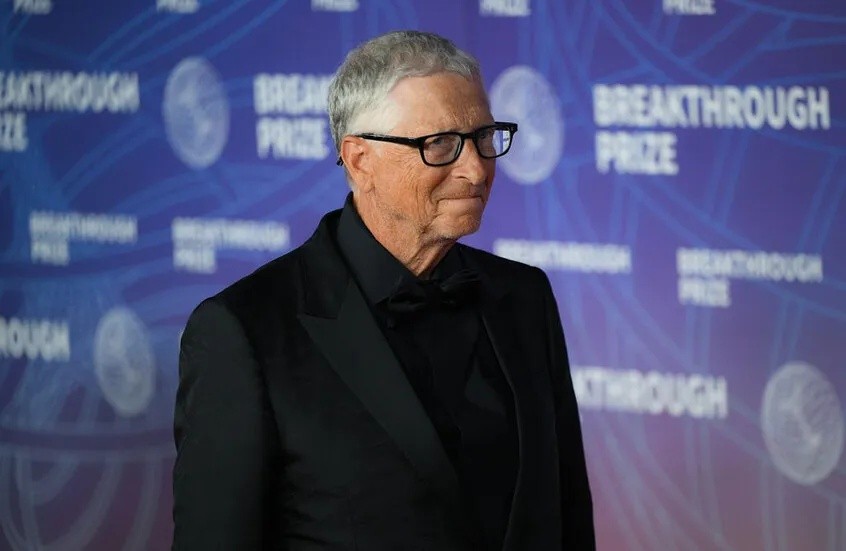
Bill Gates, the co-founder of the technology giant Microsoft, stated that achieving effective international cooperation in the field of artificial intelligence presents a challenge "more difficult" than the negotiations witnessed during the Cold War era concerning nuclear non-proliferation. Gates' remarks came
during an interview with the "Meet the Press" program on "NBC News," where anchor Kristen Welker inquired about the possibility of replicating the model of cooperation that prevailed between the United States and the former Soviet Union to curb nuclear
weapons development, in the current context of relations between the United States and China regarding artificial intelligence. Gates affirmed in his response that the current challenge is "certainly more difficult," referencing precedents of U.S. cooperation with other nations on various issues,
from aviation safety to nuclear non-proliferation efforts. He added: "AI is one of those areas where we will have to return to that principle: 'Hey, we are all in this together; all of humanity is in this together.'" Gates stressed the
necessity for law enforcement agencies and legislators to collaborate in defining effective frameworks for "protection and monitoring," while emphasizing the importance of not causing "significant slowdowns" in the pace of technological innovation by AI companies. He clarified that legislation imposing
regulatory controls on AI "must certainly" be passed, asserting that self-regulation by companies is insufficient. In the context of his repeated warnings about the potential risks of artificial intelligence to humanity, Welker questioned whether AI could pose a threat to the
existence of human life on Earth. Gates responded that "AI is certainly powerful enough to drive events that cause a billion deaths," noting that "while it's very difficult to reach 100 percent, there has never been a weapon with the
power of combining people with bad intentions using the latest AI tools." Gates further stated that the ongoing discussions within the technology sector regarding the risks posed by AI were "great," but he warned that the next challenge stems from those
who "either underestimate this or see it as just competition." He concluded by saying: "It's very scary that we don't have all the thinkers who are asking: How do we want to shape this future?"