
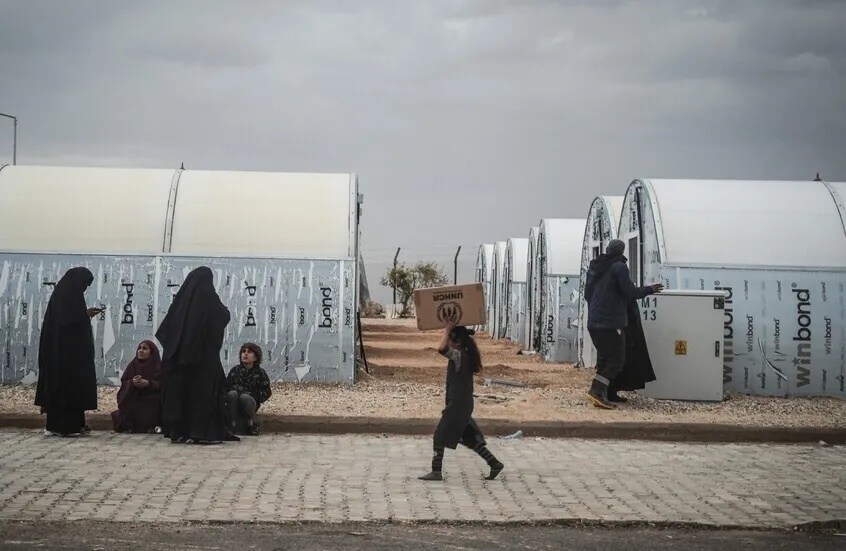
A recent American report has revealed the escape of large and unspecified numbers of ISIS fighters and their families from detention facilities that once housed over 23,000 individuals, warning of an imminent danger posed by the emergence of a new
generation of the terrorist organization. The report, issued by a high-ranking American entity involved in "Operation Inherent Resolve," confirmed that the terrorist organization's exploitation of the security vacuum, particularly with the diminished control of key local forces, has bolstered its cells'
ability to reorganize and expand in the region. The report disclosed what was described as the largest "collective escape and disappearance" of ISIS families and militants. It noted that early 2026 witnessed a widespread collapse of the detention system for ISIS
members and their families in northeastern Syria, resulting from the loss of control by the Syrian Democratic Forces over those areas. Furthermore, American intelligence reports, in coordination with Syrian officials, confirmed incidents of "mass escape" from Al-Hol camp. Estimates from American
intelligence, published by The Wall Street Journal, indicated that between 15,000 and 20,000 individuals associated with ISIS had fled and disappeared, becoming free amidst the pervasive chaos. The population of Al-Hol camp drastically and unexpectedly decreased from approximately 23,400 people to
less than 1,500. The sections designated for foreign women and children were completely emptied through organized smuggling operations that exploited vulnerabilities in the camp's security fence. Concurrently with these developments at the camp, other mass escapes occurred from prisons affiliated with
the Syrian Democratic Forces, with Kurdish sources reporting that nearly 1,500 prisoners escaped from Al-Shaddadi prison following attacks and clashes in the area. International security reports currently warn that this collective disappearance of the organization's families and militants poses an extremely
serious strategic threat. It provides ISIS with a golden opportunity to reorganize its ranks and build and reactivate its sleeper cells in the Syrian desert and along the Iraqi border.