
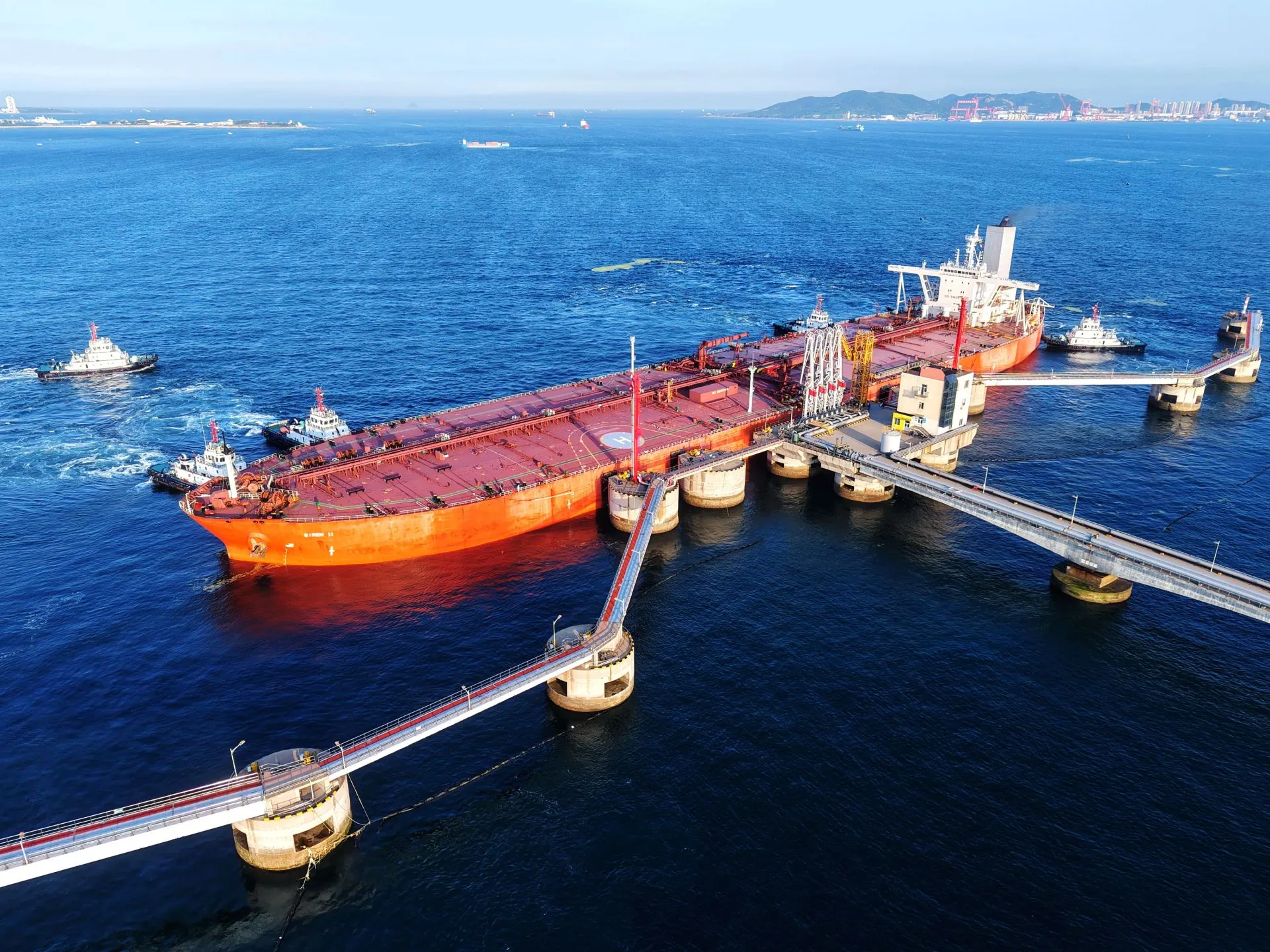
Official data released on Monday showed that crude oil production in China fell in April to its lowest level since August 2022, as the Iran war curtailed refining operations in the world's second-largest oil consumer.
According to data from the National Bureau of Statistics, refinery output fell by 5.8 percent compared to the previous year to reach 54.65 million metric tons, or about 13.3 million barrels per day.
Production during the first four months of the year decreased by 0.5 percent compared to last year.
The average capacity utilization rate of crude oil processing at Chinese refineries fell to 63.59 percent in April, a decrease of 4.7 percentage points from last year, and 5.13 percentage points from March, according to the Chinese consulting firm OilChem.
The reason for the production cut is the negative profit margins for processing oil, and independent Chinese refineries are expected to deepen the cuts in May, despite Beijing urging small refineries to maintain fuel production.
The Chinese consulting firm SCI reported in a note that Chinese refineries incurred losses amounting to 649 yuan per ton of processed crude oil in April, compared to a profit of 269 yuan last year. Some small refineries were forced to close for maintenance in May.
Increase in gasoline and diesel production
Despite lower refinery operating rates in China, refiners raised gasoline and diesel production.
The OilChem report indicated that this, in addition to lower demand resulting from high oil prices, pushed gasoline and diesel inventories higher.
Emma Li, an analyst at ship-tracking firm Vortexa, said: "China only drew lightly on crude oil inventories in April, as fuel production was limited to meeting domestic demand only amid export restrictions imposed since mid-March," according to Reuters.
China's oil imports in April fell by 20 percent on a year-on-year basis to reach 38.47 million tons, or 9.36 million barrels per day, recording their lowest level in nearly four years, a sharp decline that exceeds the drop in oil production.
Onshore inventory levels in China also rose by 17 million barrels, according to Vortexa.
The data also showed that domestic crude oil production in April reached 17.94 million tons, or 4.37 million barrels per day, an increase of 1.2 percent on a year-on-year basis.
China's oil production in the first four months of the year reached 72.74 million tons, or 4.43 million barrels per day, a decrease of 0.5 percent compared to the same period last year.
Gas
Natural gas production rose by 1.9 percent in April to reach 21.9 billion cubic meters, and total production in the first four months reached 90 billion cubic meters, an increase of 2.7 percent on a year-on-year basis.
The data also showed a drop in liquefied natural gas imports to their lowest level in 8 years at 3.55 million tons in April, recording a decrease of 23 percent on a year-on-year basis. The first four months of the
year saw imports of LNG fall to 17.94 million tons, a decrease of 10.3 percent from the same period last year.
Refined Oil
The data showed a decline in China's exports of refined petroleum products in April by 38 percent compared to the same period last year, as a result of restrictions on fuel exports that took effect in mid-March.
Total refined oil exports, which include diesel, gasoline, jet fuel, and marine fuel, reached 3.12 million metric tons in April, according to data from the General Administration of Customs.
Beijing had begun implementing fuel export restrictions in mid-March to limit the impact of the Iran war on domestic supplies, while setting specific quotas for countries including Vietnam, Indonesia, Malaysia, Australia, and the Philippines.
Jet Fuel
Jet fuel exports in April fell by 47.5 percent to reach 990,000 tons, while diesel exports declined by 54.8 percent to reach 230,000 tons.
Solar Energy
China's solar energy shipments abroad jumped by 60 percent on a year-on-year basis in April, remaining strong even after the government canceled the export tax rebate.
In April, China shipped 60 percent more solar cells abroad compared to the same month last year - and the value of shipments, at $3.12 billion, is likely less than actual growth in terms of power given the evolution of photovoltaic cell technology over time.
Shipments decreased compared to the previous month. Total April exports reached 1.34 billion cells, compared to 1.71 billion cells in March.
Exports, in terms of volume, reached 1.16 million metric tons in April, down from the record recorded in March of 1.78 million tons, driven by higher demand in Southeast Asia and Africa.
Investors bet that the Iranian war would boost demand for renewable energy sources, but they noted that the large spike in March was also a result of an accelerated pace of importing. Buyers rushed to import solar equipment before China canceled the export tax rebate program on April 1.