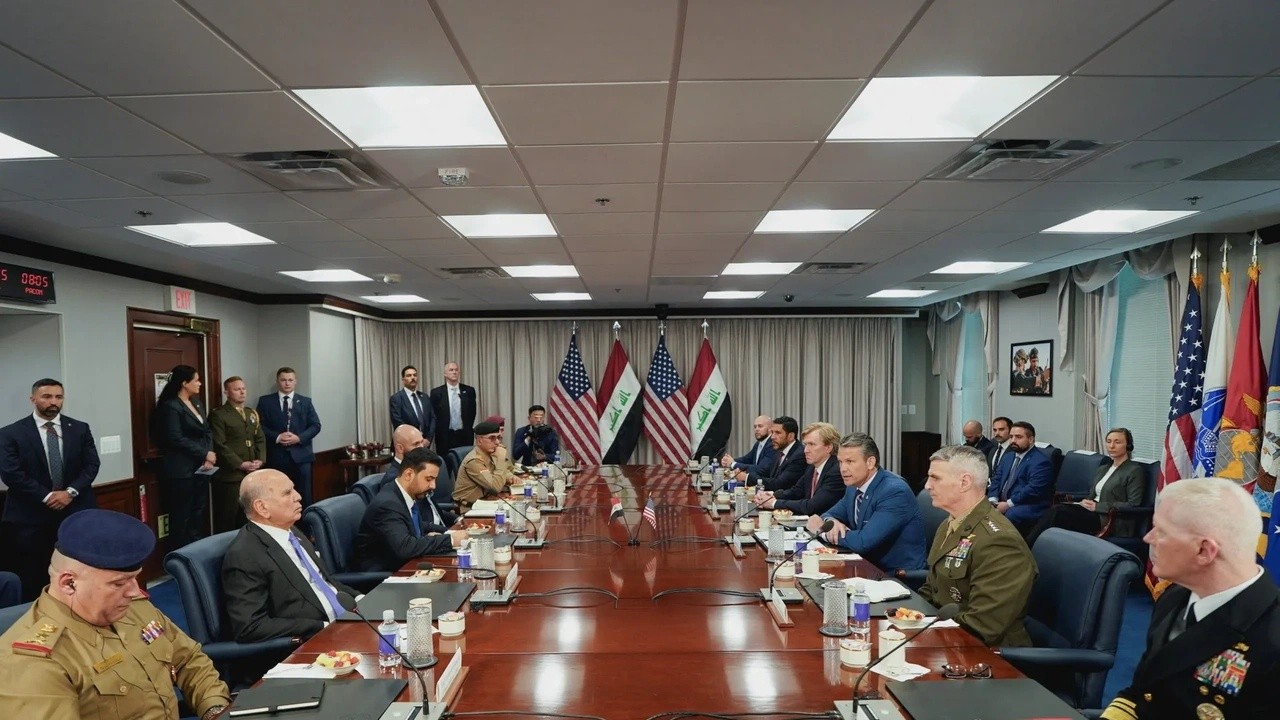
The Iraqi government faces new challenges in managing its relationship with Washington following the results of the U.S. midterm elections, which resulted in Democratic control of both the House and Senate. This shift raises questions about how the new political
balance in Congress will affect the U.S. administration's policy toward Iraq. The change in congressional majority suggests an increased capacity for Democrats to oversee the administration's performance, launch investigations into its policies, and influence legislation and government spending, potentially impacting
the nature of U.S. engagement with Iraqi issues. An Iraqi coalition is closely monitoring the U.S. election outcomes, anticipating that some armed factions might exploit the internal focus in the U.S. to escalate attacks or expand their operational scope. These
developments reflect concerns that the U.S. administration's preoccupation with congressional conflicts could lead to diminished attention to foreign affairs, while maintaining pressure on Baghdad to curb the influence of Iran-linked armed groups. A former senior researcher at the National Endowment
for Democracy suggests that the Iraqi Prime Minister needs a new strategy in dealing with the United States, emphasizing the importance of strengthening ties with American institutions, which have gained a more significant role in decision-making. Since the current president
took office, Washington has intensified pressures on Iraq to distance itself from Iran and reduce the influence of Tehran-backed armed groups. Meanwhile, Iranian officials and Iraqi faction leaders welcomed the election results, viewing them as a setback for U.S. policies.
Although Congress holds legislative and oversight powers affecting foreign policy, the president retains a central role in shaping and executing this policy, meaning that a shift in congressional majority does not automatically transfer the authority to set U.S. positions on
Iraq to the Democrats. The new majority is expected to begin its duties with the congressional session in January, making the impact of election results on U.S. policy toward Iraq gradual rather than immediate. Key issues linking Baghdad and Washington
include the future of armed factions, U.S. sanctions, and security cooperation following the conclusion of the international coalition's mission against ISIS. In April, the U.S. Treasury targeted leaders of Iran-affiliated Iraqi factions accused of responsibility for attacks against U.S. interests,
employing financial tools to pressure Baghdad, including suspending dollar shipments and measures related to security cooperation, some of which resumed in July. An Iraqi media dean warned against the government basing its positions on expectations tied to Democratic victories, emphasizing
that U.S. policy toward Tehran is unlikely to change fundamentally, and that pressures on Iraq will continue as long as the U.S.-Iran conflict persists. On the security front, the United States and the Iraqi government agreed to end the international
coalition's mission against ISIS by 2026 and transition to a bilateral security cooperation framework amid regional tensions and attacks by armed groups on U.S. interests, leaving the future of the military presence contentious. Washington is expected to raise its demands
on Baghdad in the coming phase, while the Iraqi government seeks to ensure the continuation of dollar shipments and possibly lift sanctions on banks and companies, making the upcoming period a test of the government's ability to balance U.S. relationship
requirements with pressures related to Iranian influence.