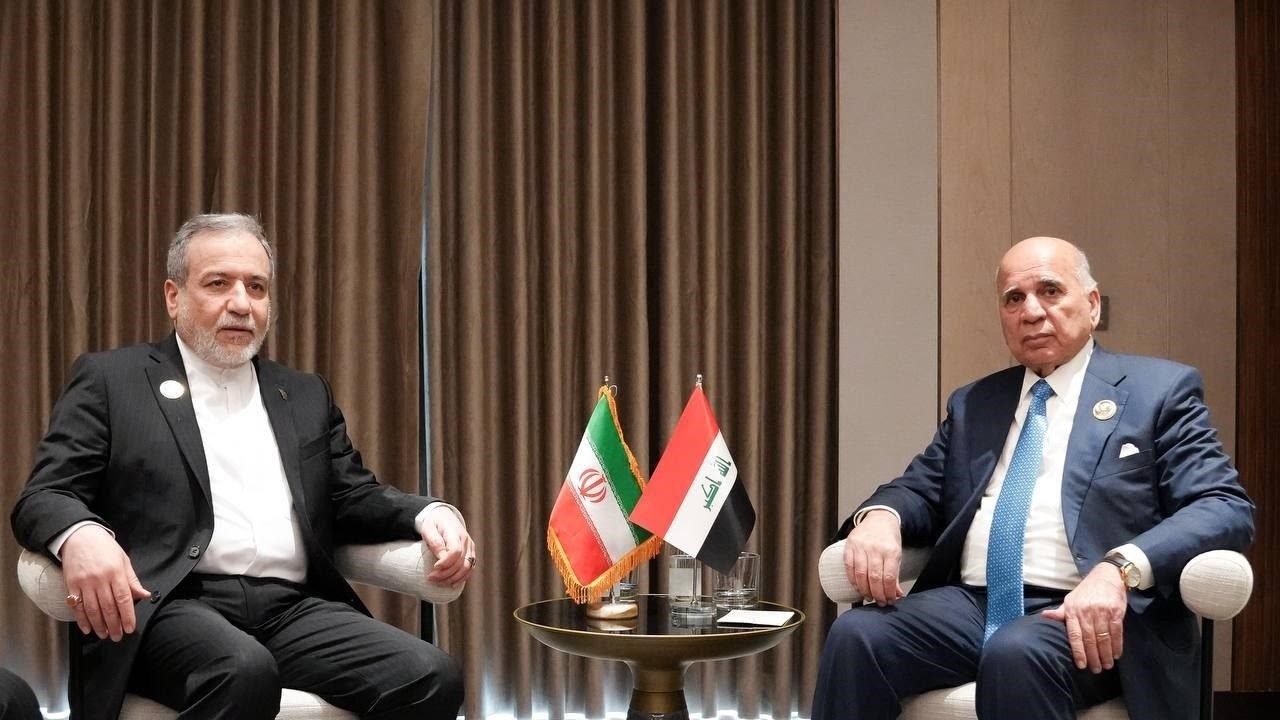
Tehran has linked the restoration of security and stability in the vital maritime passage of the Strait of Hormuz to the cessation of American military and interventionist actions, relying on a specific Iranian roadmap comprised of seven phases. This position
was articulated by Iranian Foreign Minister Abbas Araghchi during bilateral discussions held on Sunday in the Iraqi capital, Baghdad, with his Iraqi counterpart, Fuad Hussein, on the sidelines of the 52nd session of the Council of Foreign Ministers of the
Organization of Islamic Cooperation. The Iranian minister expressed his appreciation for Iraq's commendable efforts in hosting and organizing this ministerial gathering, voicing hope that Baghdad's presidency of the council would witness initiatives that elevate the organization's standing and bolster its
role in addressing pressing Islamic causes. Araghchi stressed the urgent need for Muslim nations to prioritize shared issues, foremost among them the Palestinian cause, particularly in light of ongoing expansionist policies and war-mongering driven by the Zionist entity across the
region, while calling for deeper dialogue and solidarity to transcend differences against mutual threats. Regarding security in the Strait of Hormuz, the Iranian top diplomat held the United States and the Zionist entity fully responsible for prevailing security tensions and
their adverse economic repercussions regionally and globally, characterizing them as the direct consequence of joint military aggression directed at the Islamic Republic. He underscored Tehran's readiness to restore security across the strategic waterway on the condition that Washington halts its
hostile and intrusive measures in accordance with the seven-point Iranian proposal, reiterating his country's dedication to diplomatic paths to de-escalate crises. He added that Iran acts decisively against any threat endangering its national security or vital interests, alongside its diplomatic
pursuit of regional peace. The two ministers also addressed developments regarding Yemen and the Arabian Peninsula, with Araghchi asserting that the conflict cannot be resolved through military force or blockade, urging regional actors to draw lessons from the past decade.
He emphasized resolving the issue within the United Nations Charter framework while respecting Yemen's sovereignty, territorial integrity, and humanitarian rights, affirming Iran's willingness to help foster conducive conditions for inter-Yemeni dialogue. Addressing claims regarding the targeting of Mecca and Medina,
Araghchi highlighted the sanctity of Islamic holy sites, pointing to official denials issued by the Yemeni army regarding those accusations. He cautioned against exploiting such unfounded claims to sow discord within the Islamic community, emphasizing the preservation of unity inside
the Organization of Islamic Cooperation. The meeting concluded with discussions on bilateral relations and means to expand economic, commercial, and security cooperation between Baghdad and Tehran to advance regional stability.