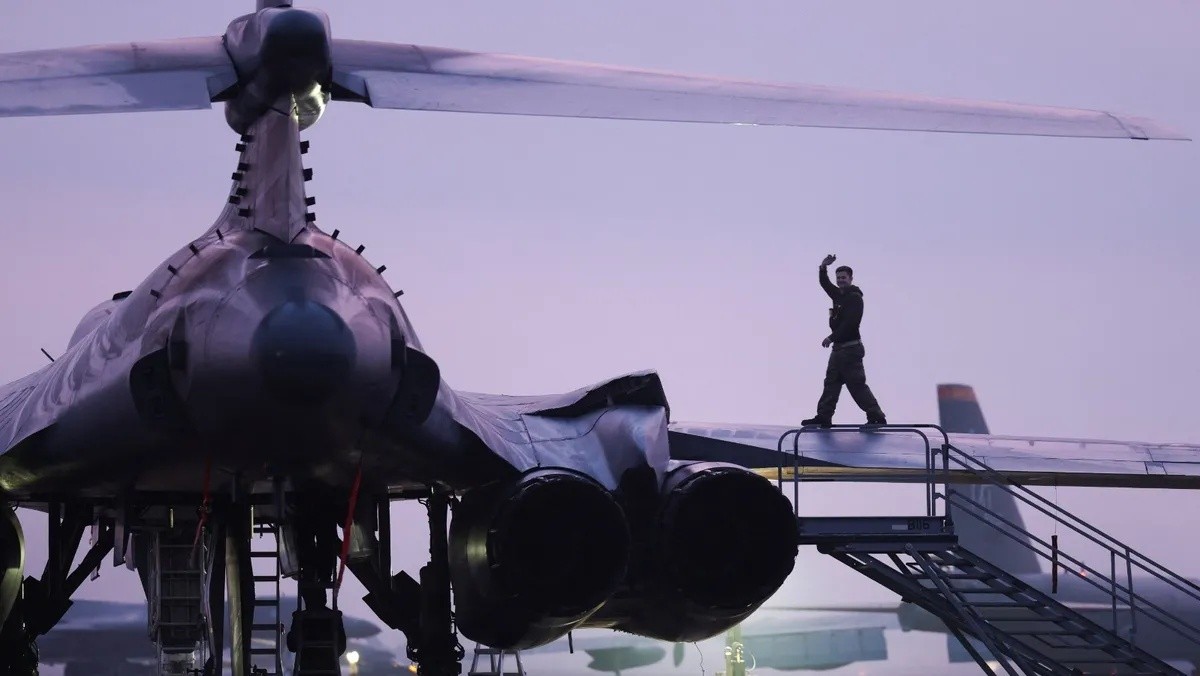
Security concerns have escalated in British circles regarding vital military facilities, following a decision by US President Donald Trump to withdraw B-1 bombers from an air base located in British territory, based on data described by Washington as linked to
security threats. In this context, Bloomberg cited current and former British officials confirming that the withdrawal of those strategic bombers could encourage regional and international parties, such as Iran and Russia, to increasingly rely on local proxies and groups to
carry out sabotage operations. These officials expressed deep apprehension that hostile nations might conclude they have the ability to enact forced changes in the Western defense system and undermine the stability of their adversaries by employing local criminals to carry
out proxy attacks at a relatively low cost. These developments shed light on emerging tensions between the government of British Prime Minister Andy Burnham, which was formed only weeks ago, and the US administration. This came after statements by the
US president indicating that the aircraft did not leave the Royal Air Force base in Fairford, western England, by coincidence, noting that this base is one of the most prominent strategic sites supporting US air operations. For its part, the
US administration clarified through one of its officials that its decisions are always made based on the highest standards of caution, stressing that US forces possess full readiness to deal with any potential risks originating from Iran. In the same
context, an official in the US Department of War (Pentagon) confirmed Washington's continued assessment of threats surrounding the bases it uses, and taking the necessary measures to secure personnel. The relocation of the aircraft by air had taken place following
reports of a plot targeting the Fairford base, at a time when the British Prime Minister indicated the possibility of Iranian involvement in that plot. These developments resulted in the arrest of a number of individuals on suspicion of preparing
for sabotage acts, before many of them were released on bail, with investigators confirming that all possibilities remain under active investigation. It is noteworthy that threats directed against the Fairford base, which the United States uses as a launching pad
for its operations in the Middle East, increased in severity in light of the conditions of the Iran war. Consistent with that, US Vice President JD Vance's position matched the president's statements, showing keenness to reassure journalists that the relocation
of the aircraft came out of a desire to apply the utmost caution to protect members of the US military. Nevertheless, British officials expressed high confidence in the efficiency of the base's protection system and close monitoring of all threats,
considering that risks exist but the chances of success for any attack remain slim. Informed sources told Bloomberg that patrol duties were noticeably intensified before the incident, alongside bolstering monitoring measures and deploying advanced anti-drone equipment. The sources pointed out
that drones represent only one pattern of diverse threats, alongside other forms of sabotage, stressing that this does not mean the multiple security layers surrounding the base are easily breached. Following the withdrawal decision, military officials from other countries hosting
British bases initiated contact with London to inquire about risk levels, and those countries received reassurances regarding the strength and durability of existing defenses. At a time when some US officials hypothesized that Iran might have tried to emulate the
Ukrainian drone attack that targeted Russian bombers last year, known as "Operation Spider Web," British officials largely ruled out the successful occurrence of a similar scenario. For his part, US Secretary of State Marco Rubio stated that a foreign party
was involved in the incident near the Fairford base, without providing direct evidence. According to informed sources, communication between the American and British sides regarding the motives for withdrawing the bombers was limited, which put senior British officials in a
state of confusion regarding the speed of redeployment. The sources indicated that the level of risk tolerance related to military equipment appears low on the American side. Finally, Greg Bagwell, former commander of the Royal Air Force and current president
of the British Air and Space Power Association, commented that the method of announcing the withdrawal and dealing with it was ambiguous and, at worst, harmful to joint relations and the level of security of British bases, stressing that this
situation contradicts the volume of actual coordination existing between the two countries in managing and sharing intelligence information to face those threats.