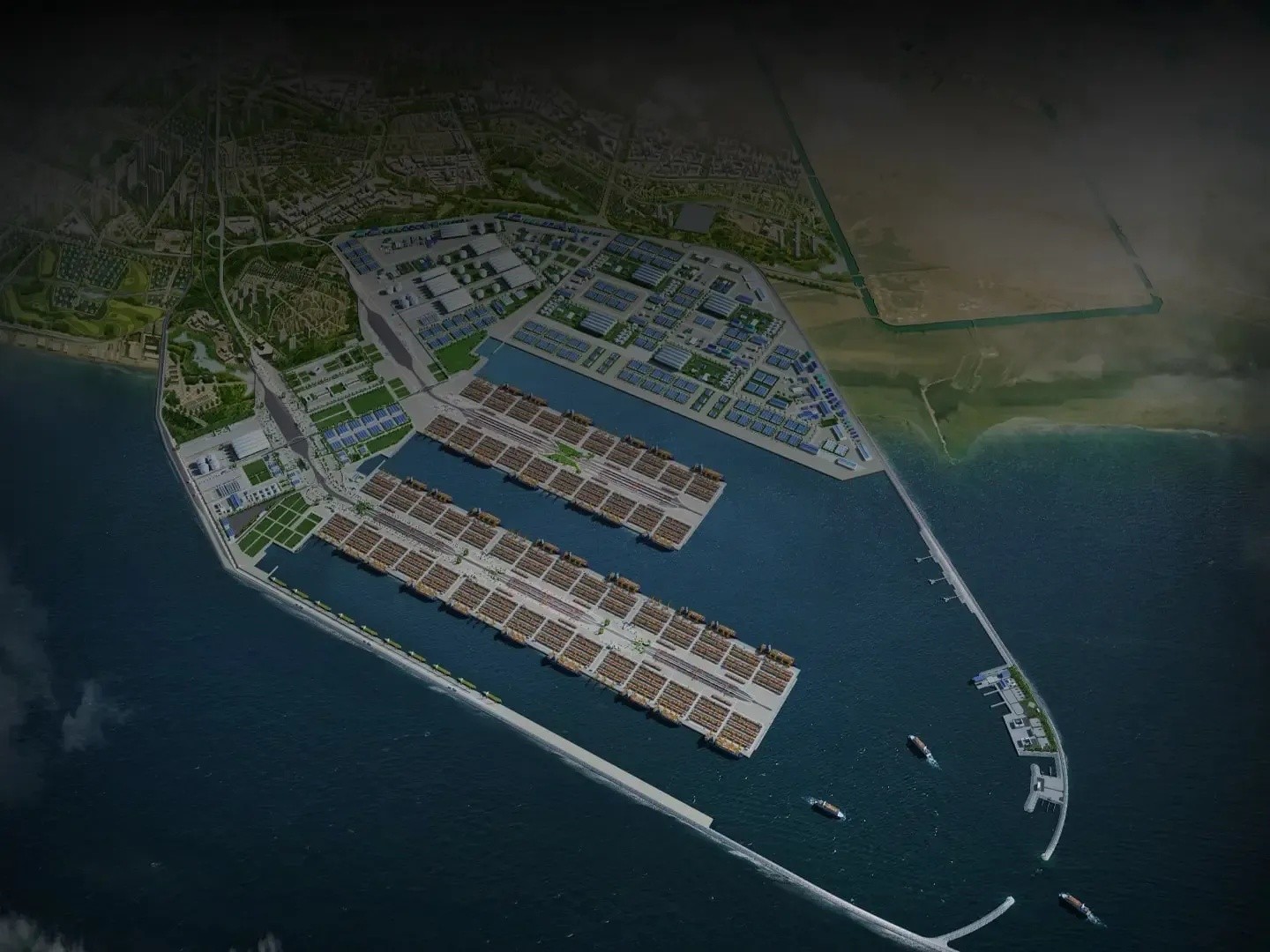
The Ministry of Transport has affirmed significant progress in the Grand Fao Port project, indicating the venture is nearing its trial operation phase upon completion of works and availability of suitable conditions. The Ministry also revealed that over 90 percent
of the crucial Development Road plans have been finalized. Hussein Ahmed, the Director of Media and Government Communication at the Ministry, stated, according to the official agency, that the Grand Fao Port project is witnessing remarkable advancement. He pointed out that
the submerged tunnel has reached a 98 percent completion rate, while the exchange yard's completion stands at 90 percent, and all five designated berths have been built. Ahmed clarified that the project's trial operation was affected by equipment breakdowns due to
the Strait of Hormuz crisis, which occurred after essential works like berths and exchange yards were completed. He emphasized that the trial phase requires a secure environment, affirming it will commence immediately after the resolution of the Strait of Hormuz
dilemma, as progression is unfeasible under the current crisis. He further noted that all works will be fully completed, and once suitable general conditions are met, the trial phase will begin, followed by actual operation, which could be entirely Iraqi
or involve partnerships. Addressing rumors portraying the port as a competitor to other regional projects, Ahmed explained the existence of a campaign by what he termed "those with limited information" and "those targeting the project" to depict it as such. He
asserted that the port does not compete with any similar regional projects; instead, it complements them, being destined to become the primary artery for the strategic Development Road project. He highlighted that the port's operation will generate employment and bolster
Iraq's position as a regional and strategic hub for transport and economic cooperation. Ahmed also mentioned that, as described by the Minister of Transport, these projects represent "sustainable peace," considering economic cooperation and transport initiatives as pillars of lasting peace
among nations, ensuring these economic projects are interconnected. Regarding the specifics of the Development Road project, Ahmed recalled that late last July saw the signing of a memorandum of understanding (MoU) with the Turkish side. This signing took place during the
visit of the Iraqi government delegation, led by the Prime Minister and the Minister of Transport, to Turkey. Preparatory meetings and minutes followed, paving the way for the final draft of the joint cooperation agreement concerning the development of transport
projects and associated infrastructure. He added that the agreement's preparation involved several entities and ministries, including the Central Bank and the Ministry of Oil, with a specific portion pertaining to the Development Road. Ahmed clarified that the agreement is comprehensive, covering
infrastructure development and cooperation in the transport sector, including the strategic Development Road project. Ahmed indicated that the final draft of the agreement has currently returned to the relevant authorities in both Turkey and Iraq for review and feedback, in preparation
for its eventual signing and ratification by Parliament and the Presidency. He pointed out that the contracting phase follows the agreement, as each project progresses through three successive stages: the memorandum of understanding, then the agreement, and finally the contracting. The
Director of Media and Government Communication affirmed that the swift completion of both the memorandum of understanding and the final draft within a short period signifies a high level of seriousness in implementing the project. He disclosed that the full
designs for the Development Road are expected to be announced soon, with the Spanish company having completed over 90 percent of the land road and railway track plans. Ahmed concluded his statements by explaining that the identification of the Fishkhabour point
significantly facilitated the determination of the railway and land road routes, as an area spanning 90 to 100 kilometers had previously been undefined. He underscored that settling this crossing point contributed to accelerating the completion rate of the plans, which
will be unveiled in the upcoming phase.