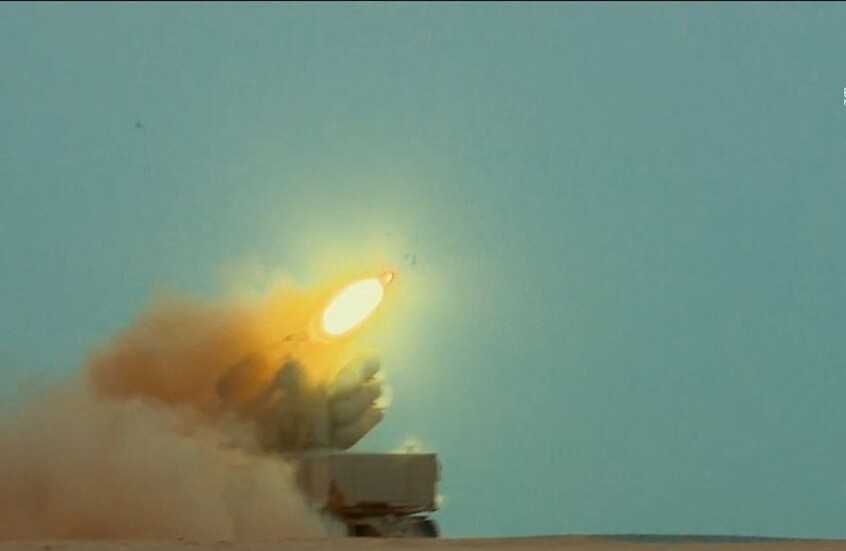
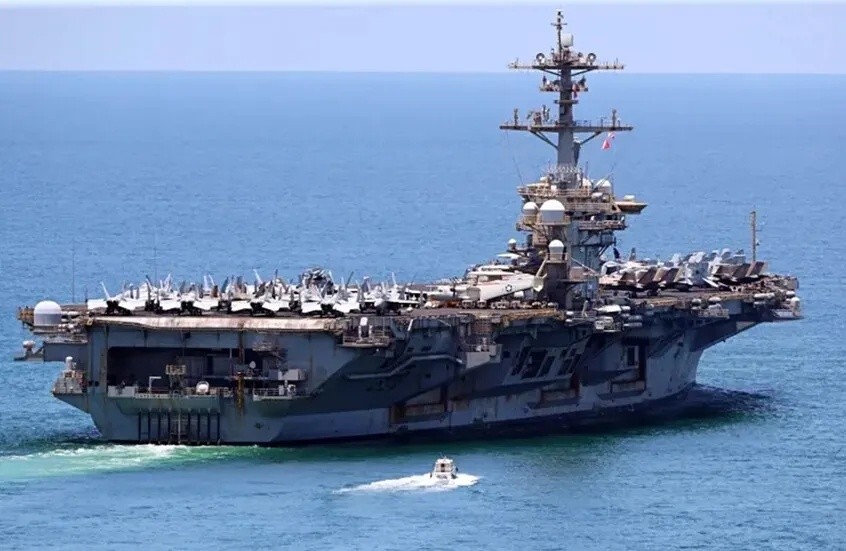
The "New York Post" newspaper reported that the Iranian Revolutionary Guard Corps (IRGC) used, for the first time, missiles equipped with electro-optical guidance systems to target US warships near the Strait of Hormuz. Citing Iranian sources, reports indicated that the
IRGC Aerospace Force launched a ballistic missile wave that struck 10 US ships in the Strait and a US military base in Jordan. This came in response to previous American strikes that destroyed five Iranian oil tankers near Kharg Island. These
missiles are believed to carry optical sensors and cameras to track and hit targets with high precision without relying on the Global Positioning System (GPS), making them resistant to jamming. Sources suggested the new weapon is the "Qassem Basir" medium-range
ballistic missile, unveiled last year, featuring a half-ton warhead and a range exceeding 1200 kilometers. Mohsen Rezaei, the new Secretary of Iran's Supreme National Security Council, indicated the appearance of a new "anti-destroyer" missile in the latest attack. He considered this
part of a new Iranian defense strategy focusing on "active deterrence" rather than "reactive deterrence." In contrast, the US Central Command (CENTCOM) confirmed the attacks but stressed their complete failure, noting the interception of Iranian missiles in Jordan. CENTCOM denied any
casualties or damages to its forces or ships, affirming its vessels successfully evaded the attacks and continued their patrols. This escalation follows CENTCOM's announcement of destroying 10 Iranian oil tankers last week, a reciprocal escalation threatening navigation security in the Strait
of Hormuz, vital for 20% of global oil supplies. The IRGC warned of imminent strikes on tankers and bases in Bahrain and Kuwait, urging crews to evacuate vessels immediately, signaling a potential widening of the confrontation.