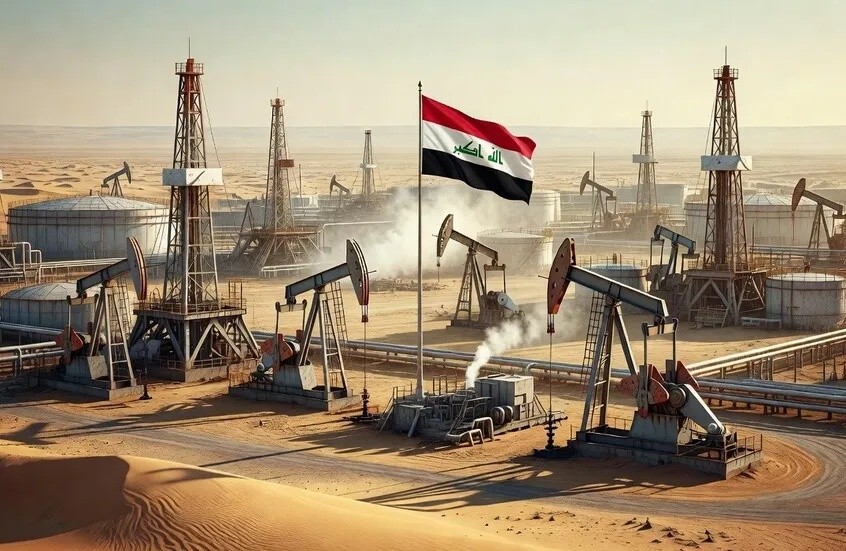
Iraq is making diligent efforts to boost its oil production quota within the OPEC+ alliance. These endeavors coincide with a review by OPEC and its allies of member states' production capacities, aimed at determining the allowable volumes for the coming
year. Bloomberg reported, citing informed sources who requested anonymity due to the ongoing confidential process, that Iraq, the second-largest oil producer within the organization, aspires for its future production targets to be calculated based on a level of six million barrels
per day. This figure represents a notable increase compared to its current output. Baghdad had hinted last June at the possibility of withdrawing from the organization if it did not secure a sufficiently satisfactory baseline quota. This stance is seen as
a potential threat to the stability of the alliance, which was recently shaken by the departure of the United Arab Emirates. In the context of this review, OPEC and its allies have commissioned an external consultant to assess the maximum actual
production capacity each member state can achieve, with the objective of aligning quotas with practical realities. This process is expected to conclude by the end of the current month, with ratification by oil ministers anticipated during their scheduled meeting in
late November. The outcomes of this review are of paramount importance for the balance of global oil markets, particularly given the potential for an oversupply if Gulf exports, which were disrupted by the war on Iran, resume. Furthermore, the decisions made
will directly influence ongoing negotiations with major oil companies such as Chevron and Exxon Mobil regarding the resumption of their operations in Iraq. Moreover, this decision could have crucial implications for the unity of the OPEC organization itself, which is experiencing
escalating tensions. These tensions are clearly manifested with Venezuela, another founding member of the organization, exploring the possibility of withdrawal following the signing of an agreement with US President Donald Trump that grants Washington extensive control over a portion of
its oil reserves. Iraqi officials have explicitly articulated the country's oil ambitions. Last May, Oil Minister Bassem Mohammed Khdeir Al-Abbadi stated that Iraq is engaged in discussions with OPEC to increase its production to five million barrels per day once the
war with Iran concludes. Similarly, Prime Minister Ali Al-Zaydi announced this month that the nation aims to reach approximately ten million barrels per day by 2030. However, the acceptance of a six million barrels per day level remains uncertain, especially as
Iraq's current production ceiling within OPEC+ for September and October is set at 4.431 million barrels per day. The International Energy Agency, meanwhile, estimates Iraq's total sustainable capacity at approximately 4.9 million barrels per day. Nevertheless, the country's actual current
production is significantly lower than these figures, attributed to the war on Iran which impedes oil flow through the Strait of Hormuz. According to a Bloomberg survey, Iraq's average production in August reached 2.98 million barrels per day.