The Ministry of Transport announced today, Sunday, the inauguration of seven new international transit routes over an eight-month period, affirming that this step comes in the context of Iraq's transformation into a leading regional logistics hub. Israa Hanoun, Director of the
Land Transport Management Department at the Ministry, stated in remarks to the official newspaper that the Ministry of Transport's efforts are focused on strengthening Iraq's position as a pivotal link for transport and transit, connecting the Arabian Gulf with Turkey
and Europe. This is being achieved through comprehensive development of land, rail, and port networks, integrating them into a comprehensive and multimodal transport system. Hanoun added that the Ministry is initiating efforts to activate and expand the scope of the International
Road Transport (TIR) system, in addition to opening new international routes. These endeavors include simplifying border and customs procedures, accelerating digital transformation, and enhancing effective coordination among all relevant parties. These measures coincide with the implementation of strategic projects collectively
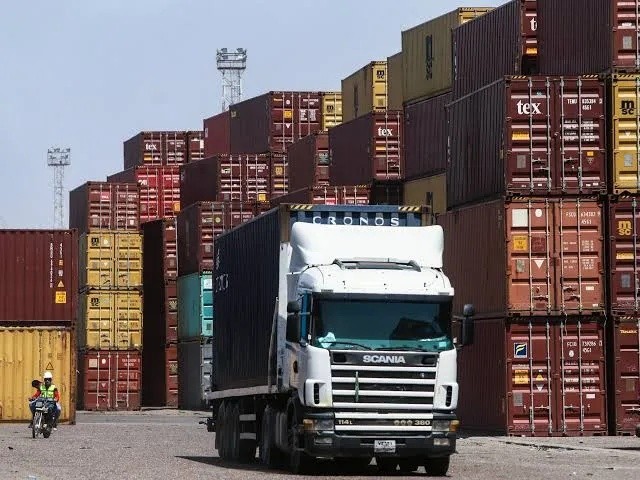
aimed at reducing truck transit times, thereby boosting Iraq's competitiveness as a pivotal commercial center. The TIR system is poised to be a fundamental pillar in this direction, especially after its entry into force in Iraq starting April 1, 2025. Hanoun
noted that transit traffic has witnessed significant growth since the implementation of the TIR system, according to data issued by the International Road Transport Union (IRU). She pointed out that 2026 saw a major expansion in the international network of
routes, with the opening of seven new international transit routes within eight months, underscoring the accelerating pace of utilizing Iraqi territory as a vital corridor for international transport. Hanoun clarified that the ambition extends beyond merely increasing the number of trucks,
aiming to gradually achieve extensive and sustainable transit movement. This includes enhancing the efficiency of border crossings, roads, and logistical services, with the goal of enabling Iraq to attract a larger share of the existing trade flow between Asia, the
Gulf, Turkey, and Europe. Hanoun also mentioned that Iraqi transit routes are currently experiencing active and increasing traffic, connecting Iraq with several important countries. Prominently featured are Turkey and the Arabian Gulf states, in addition to Jordan and Saudi Arabia, with
a gradual expansion of the connection network to include Central Asian and European countries. Hanoun further elaborated on the strategic importance of Turkey as a main gateway to European markets, confirming that Iraq represents a natural link between Turkey and the
Gulf, as well as between regional countries and Central Asia. She reported that the recent period witnessed the activation of new routes towards Saudi Arabia and Turkmenistan, which demonstrates the steady expansion of the Iraqi transit network. She emphasized that
this diversification of routes is a key indicator of Iraq's transformation from a limited transit state to a potential and pivotal regional hub for logistics and international transport. In a related context, Hanoun affirmed that Iraq already possesses a foundational infrastructure
that qualifies it to play an effective regional role in this field. However, she noted that this infrastructure still requires continuous development and expansion to keep pace with the anticipated increase in transit volume. While roads, border crossings, ports, and
railways are available and constitute a solid foundation, the capacity to accommodate large numbers of trucks necessarily requires a comprehensive upgrade of inspection and waiting areas, the establishment of advanced logistics centers, the activation of electronic connectivity, the development of
truck scales, and the provision of suitable rest stops. This also includes enhancing the efficiency of roads and crossings and accelerating all customs and border procedures. Hanoun concluded her statements by emphasizing that Iraq is no longer merely awaiting the opportunity
to transform into a regional commercial corridor, but has actually embarked on practical and tangible steps to achieve this goal. These steps include activating the TIR system, expanding the transit route network, and modernizing existing crossings and roads. She indicated
that the primary challenge in the upcoming phase lies in transitioning from merely increasing the number of passing trucks to building a comprehensive and integrated logistics system that ensures Iraq becomes a competitive and sustainable choice for regional and international
trade movement.