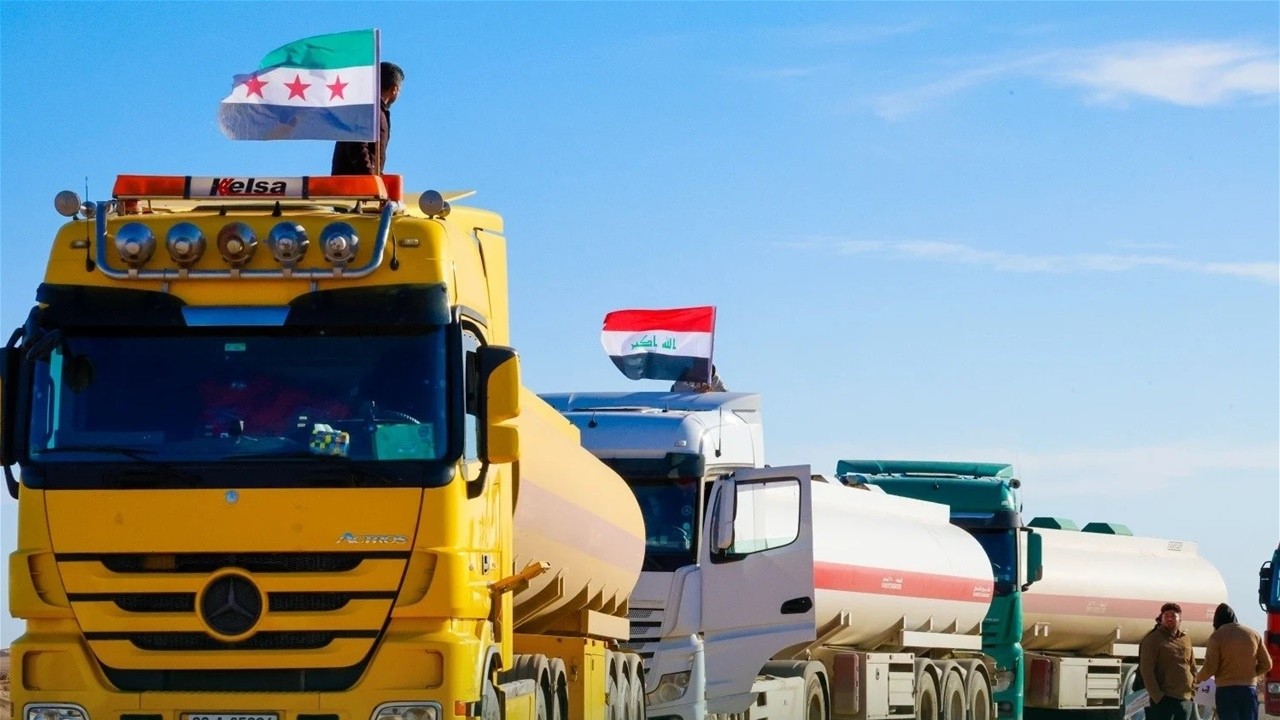
Baghdad is moving towards activating a new route for exporting its crude oil, away from traditional outlets, through Syrian territory to the port of Baniyas. This step is part of Iraq's strategy to diversify export channels and reduce reliance on
existing maritime routes. The Iraq National Oil Company (SOMO) is engaged in advanced discussions with the Syrian Petroleum Company. These negotiations aim to conclude an agreement for the overland transport of crude oil from Basra province by tankers to Syrian Baniyas
storage tanks, for subsequent loading onto international carriers. Iraq currently uses the Syrian route for fuel oil exports, with crude oil transport still in planning. The agreement is expected soon, following official approvals from the Iraqi Council of Ministers, which will
authorize SOMO to contract with the Syrian side. Loading points for this operation will be in the Al-Zubair area of Basra province. Commenting on this, SOMO Director General, Ali Nazar Al-Shatri, clarified that Iraq currently lacks contracts for crude oil export
via Syria. However, Al-Shatri confirmed intensive discussions are underway with Damascus for a tanker transport agreement. He added that this agreement would enable transferring a portion of Basra crude to Baniyas port storage tanks, whose available capacity ranges between 1.5
and 2 million barrels, before sale and loading onto tankers. Al-Shatri indicated that the agreement's conclusion is imminent, pending Council of Ministers approval and SOMO's authorization. He noted that initial quantities transported via this route would be limited, due to the
aging Baniyas tanks and their maintenance needs, despite their usability for certain crude volumes. According to Al-Shatri, oil is scheduled for loading from Al-Zubair 1 or Al-Zubair 2 stations in Basra, then overland transport by tankers to Syria. This temporary solution
precedes the long-term pipeline project planned by Baghdad and Damascus. SOMO's director described overland transport as a secondary option, not Iraq's primary export route, but an important addition increasing exported volumes alongside sea shipments. The move towards exporting Iraqi oil via
Syria occurs as Baghdad primarily relies on its southern ports for global market access. Al-Shatri stated Iraq exported approximately 70 million barrels of oil by sea via Basra last August, commending shipping continuity despite regional security challenges. Most Iraqi oil exports
depend heavily on the maritime route through the Strait of Hormuz. This has recently prompted Baghdad to accelerate plans for diversifying export outlets, focusing on routes through Syria and Turkey. Iraq began using Syrian territory for fuel oil exports this
year, with shipments transported overland to Baniyas port for storage and loading onto external-bound tankers. According to the Energy Research Unit's database, Iraqi fuel oil exports via Syria amounted to approximately 21.4 million barrels from the route's March inception until end-August,
including 5.91 million barrels last month alone. The tanker transport plan runs parallel to broader efforts between Baghdad and Damascus to establish a dedicated pipeline for Iraqi oil to the Syrian coast. This would provide Iraq a strategic Mediterranean outlet, bypassing
the Strait of Hormuz. The Iraqi Council of Ministers approved in June 2026 the Ministry of Oil's contracting with the Syrian side for transport, storage, and handling of light, medium, and heavy Basra crude via Syrian ports. Recent estimates suggest the
planned pipeline project will require several years. Thus, overland tanker transport offers a quicker option to initiate limited crude exports via Baniyas, pending development of larger, more sustainable infrastructure. Exporting Iraqi oil via Syria grants Baghdad greater flexibility to manage potential
navigation disruptions in the Strait of Hormuz, while southern ports remain the primary outlet for the country's oil exports.