
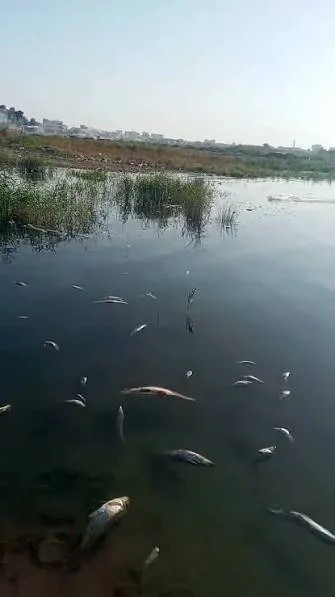
The banks of the Euphrates River, near the Old Bridge in the Syrian city of Raqqa, have witnessed a massive die-off of fish. This incident has raised widespread concern among residents about a potential environmental catastrophe, with the exact causes
of this alarming phenomenon remaining largely unclear. Activists circulated videos showing dead fish scattered along the riverbanks, reflecting severe damage to fish stocks. Local residents attribute this to some fishermen using toxic substances like "Lanate" during fishing. Confirming these allegations would
have dire consequences, affecting not only fish populations but all aquatic life. There are fears this danger could extend to Iraqi territories if contaminated fish drift downstream with the Euphrates current. Furthermore, some point to other destructive fishing methods, including using
electric shock to catch fish in the river's heart. This tactic is equally dangerous and might explain the large scale of observed fish deaths. Nevertheless, definitively identifying responsibility for this ecological disaster requires comprehensive field investigations, water and fish sample collection,
and thorough laboratory examinations by relevant authorities. If poison use is proven, its catastrophic effects could impact other aquatic organisms, threatening the river's food chain and ecological balance. Repercussions might also affect human health through consuming contaminated fish. The use of
illegal fishing methods often depletes the Euphrates River's fish wealth, impacting both quantity and type, including non-target riverine creatures. This depletion, in turn, threatens the livelihoods of many fishermen who rely solely on the river for sustenance. This year, after an
exceptional season of rain and floods, experts, locals, and fishermen widely anticipated a recovery in Euphrates fish stocks. This optimism stemmed from increased water levels and riverbed scouring by floods, which fostered aquatic plant growth and fish proliferation, allowing previously
unseen species to return. However, rampant overfishing has reset the situation to square one, portending a comprehensive environmental catastrophe that could devastate the entire fishing sector.