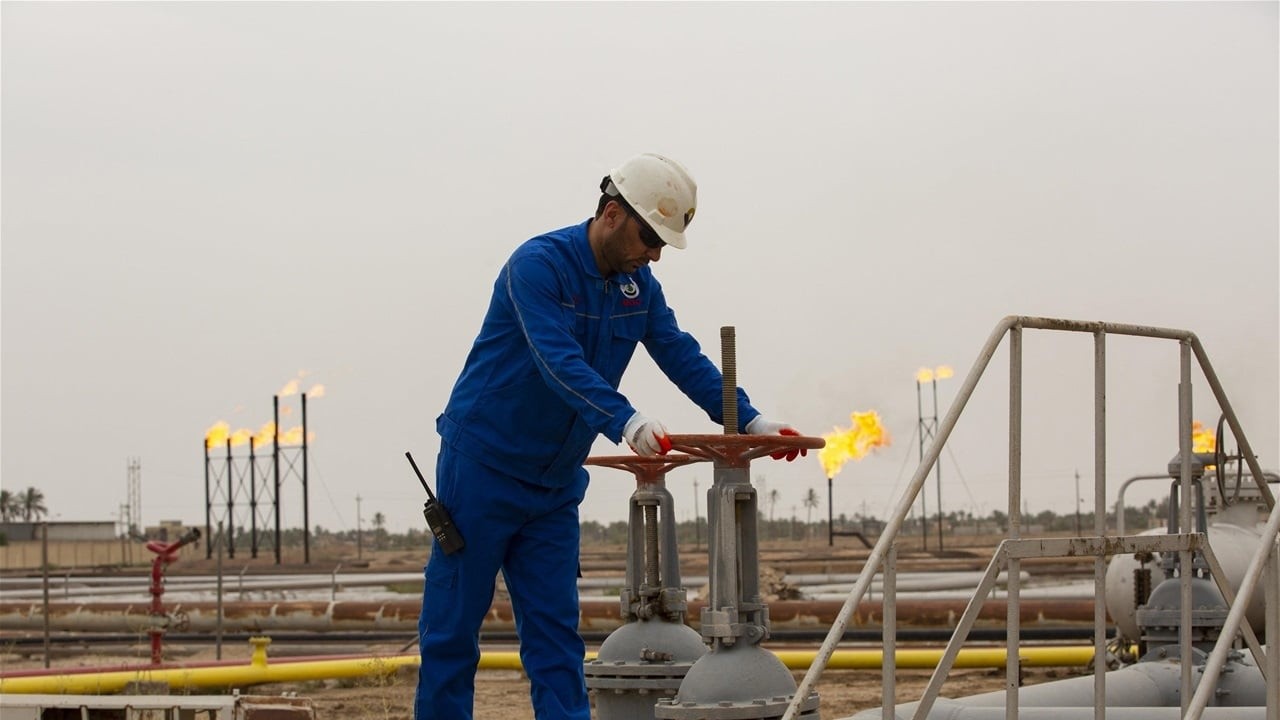
The Ministry of Oil has announced plans to enhance refining sector capabilities through investment projects in Kirkuk and Diwaniyah provinces, aiming to increase production capacity, improve the quality of petroleum derivatives, and reduce reliance on imports. These projects are expected
to generate economic benefits of approximately $1.9 billion annually. The spokesperson explained that these initiatives represent a significant step towards developing refining industries and maximizing the economic value of crude oil by expanding the participation of the Iraqi private sector,
adopting advanced technologies, transferring technology, and developing national workforce skills. In Kirkuk, Al-Burham Company is implementing a naphtha hydrogenation and gasoline improvement project with a design capacity of 14,400 barrels per day under a Build-Own-Operate-Transfer (BOOT) system, with ownership transferring
to the North Refineries Company after the contract period. The project aims to produce high-quality gasoline with an octane rating of 92, along with liquefied petroleum gas quantities ranging between 150 and 170 tons per day. The economic benefits of
this project are estimated at around $300 million annually. It is also expected to create over 2,000 direct and indirect jobs and contribute to training Iraqi personnel and transferring modern expertise and technologies. In Diwaniyah, expansion work at the Diwaniyah
refinery in Shanafiya district began in July 2025 as part of a five-year implementation plan to increase refining capacity and enhance the production of high-quality petroleum derivatives. The project includes establishing a refining unit with a capacity of 70,000 barrels
per day, a naphtha hydrogenation unit with 18,000 barrels per day capacity, a gasoline improvement unit with 10,000 barrels per day capacity, and an isomerization unit with 8,000 barrels per day capacity. The project also comprises a liquefied petroleum gas
treatment unit with a capacity of 180 tons per day, a product loading station with a capacity of 90,000 barrels per day, and industrial and service facilities including power generation stations, nitrogen production, water purification, industrial wastewater treatment, 24 tanks
for crude oil and petroleum products, and a station for filling liquefied gas cylinders. Initial estimates suggest the project could yield economic benefits and increase state revenues by about $1.6 billion annually through increased production of high-value derivatives, reduced import
costs, and activation of related industrial and service sectors. On the social front, the company is adopting an initiative to establish a 100-bed hospital in Diwaniyah to support the health sector and enhance services provided to citizens. Al-Burham Group also
seeks to expand cooperation with global companies specializing in refining technologies and oil industries such as UOP and KBR to benefit from modern technologies in hydrogenation processes, gasoline improvement, and raising the quality of derivatives. The group prioritizes deep conversion
technologies in its future plans to increase the production of white derivatives and maximize the added value of each barrel of crude oil. Additionally, it aims to establish Iraqi factories specialized in producing oil and engineering equipment according to international
standards, reducing reliance on imports, accelerating project implementation, and supporting national industry. These investment projects align with strategies to expand private sector participation in developing oil industries, enhance refining capacities, improve product quality, and reduce import bills, thereby supporting the
national economy and contributing to achieving self-sufficiency in petroleum derivatives.