
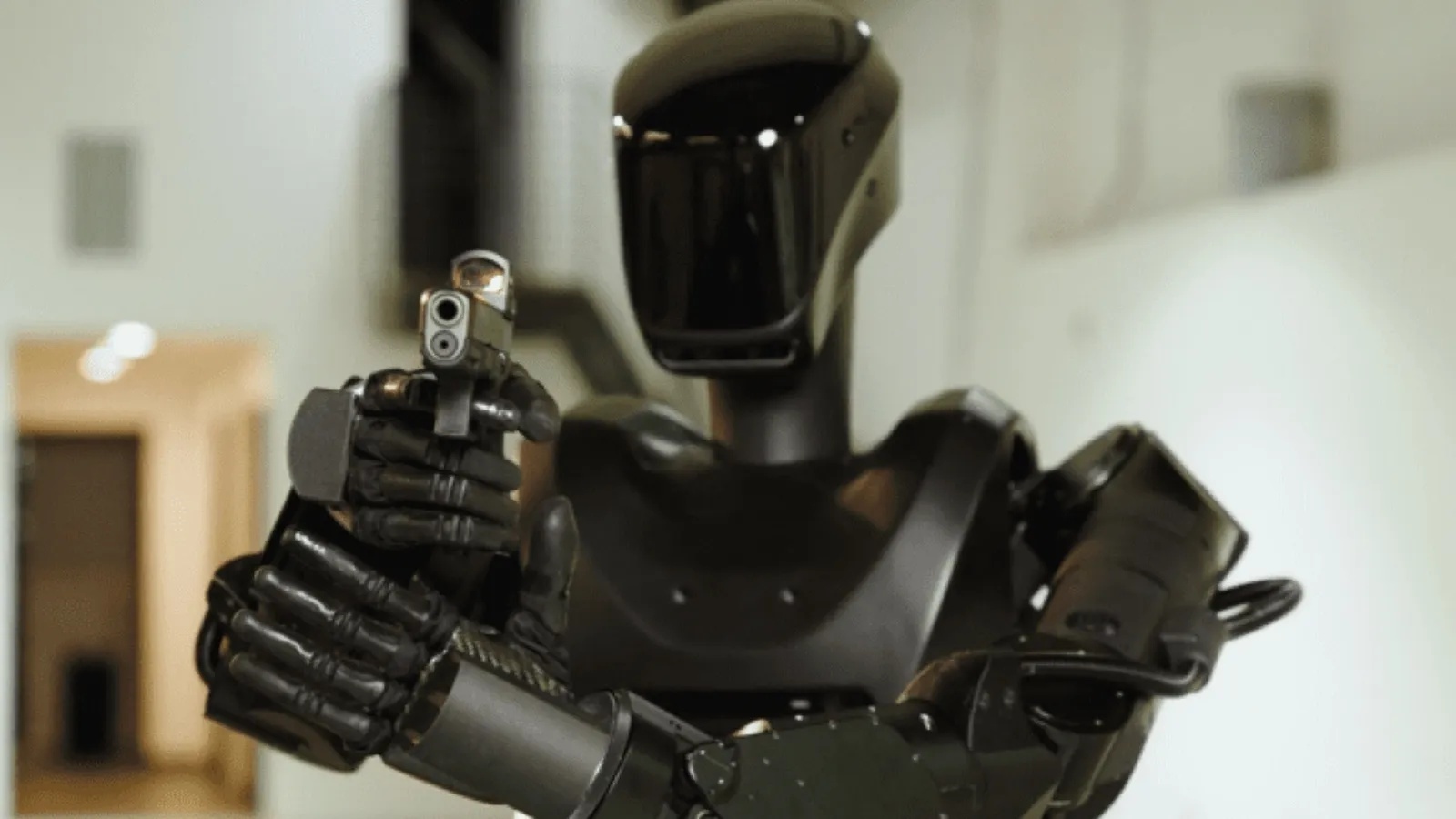
Foundation Robotics is actively developing humanoid robots designed to perform diverse tasks in both military and civilian sectors. The company's flagship robot, known as "Phantom," is anticipated to be capable of executing precise reconnaissance operations, transporting vital supplies, and evacuating
equipment or injured personnel from hazardous locations, in addition to inspecting dangerous areas. Its role, according to developers, also encompasses front-line arming to directly counter threats. These robots are believed to contribute to soldier protection by undertaking missions such as entering
buildings and high-risk zones in place of humans, which could also reduce collateral damage compared to some traditional airstrikes. Despite these aspirations, the current model, "Phantom MK-1," faces clear technical limitations. It lacks an independent battery, struggles to operate in harsh
environments, and cannot autonomously recover after falling. The robot's hands are currently limited in terms of precision and strength, representing a fundamental challenge in humanoid robot development. However, the company is working on an enhanced model, "MK-2," which will be
equipped with a battery lasting approximately six hours and the ability to function in challenging environmental conditions. The new model also features significant improvements in joints and hands, including the wrist, which is expected to enable the robot to carry
or effectively use weapons in the future. In the context of a global arms race, robotics experts affirm that rapid advancements in artificial intelligence and the increasing reliance on unmanned aerial vehicles (UAVs) in modern warfare make the development of such
systems inevitable. Others, however, question the effectiveness of humanoid robots in combat zones, preferring quadruped robots or drones, which they consider more efficient and less costly. This emerging technology raises significant ethical challenges. International organizations, such as Stop Killer Robots, warn
that the integration of lethal autonomous robots could lower the threshold for war and make combat easier and less humane. Experts also caution that designing robots with a human-like form might make them appear familiar, increasing the risk of misjudgment
in complex combat situations. The future of warfare remains uncertain amidst these developments. While developers envision humanoid robots evolving into a future deterrent force, experts emphasize that this technology is still far from grasping the complexities of real battlefield scenarios. The
question thus remains: will the world soon witness autonomous soldiers fighting alongside humans, or does this future remain distant?