
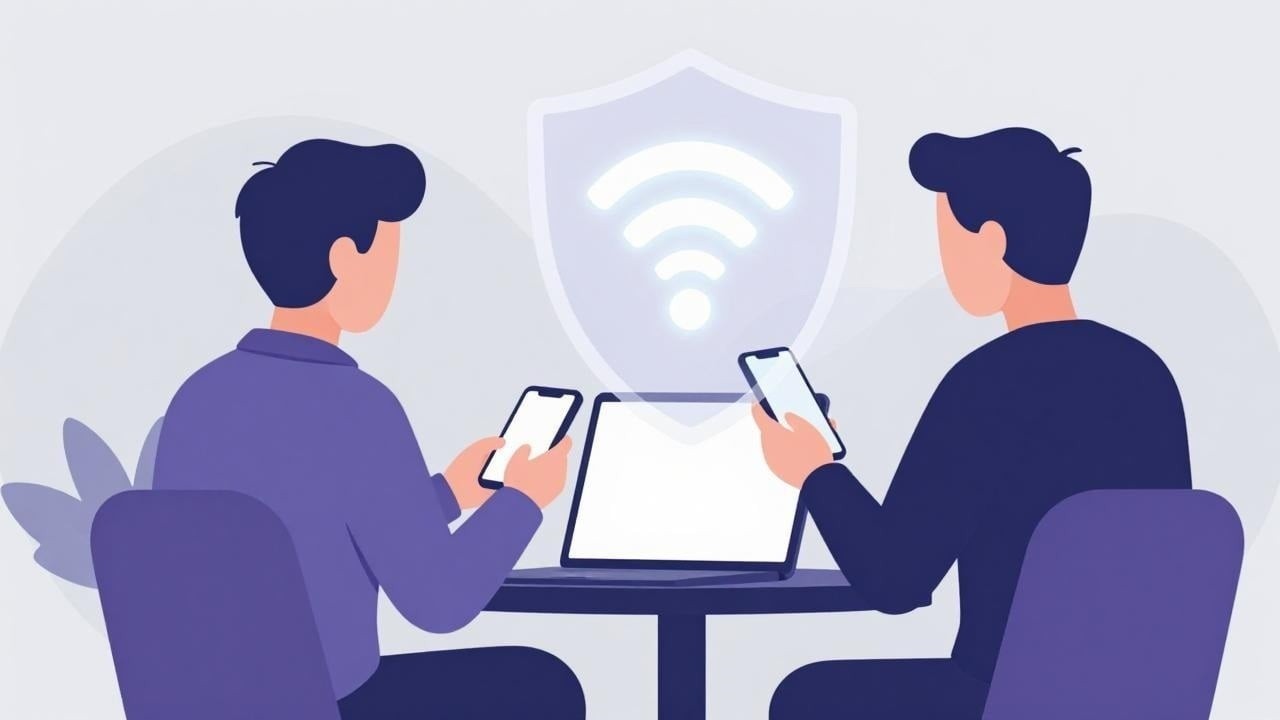
Open wireless access points spread densely in public places such as cafes, airports, and commercial centers, providing users with a convenient option for browsing the internet when phone data packages run out or when there is a need to complete
urgent tasks. Despite this apparent benefit, connecting to networks of unknown management exposes personal information to the risks of passing data through unreliable channels. The real crisis lies in usage behaviors, as individuals proceed to check bank accounts, emails, and
work platforms without realizing that the network is shared with unknown entities. When linking to a public network, information passes through its router before reaching the internet, and unlike home networks, the user's control over these devices is completely absent.
Although modern sites rely on secure encryption protocols that protect the content of correspondence, this measure does not achieve complete protection, as supervisors are able to know the addresses of visited sites, times, and durations of staying on them, which
are sufficient details to form an accurate impression of the user's interests and financial conditions. Several risks emerge that require attention, most notably fake fraud networks that rely on names matching known networks to pass data through external control bodies,
in addition to old applications that fail to encrypt their information at the required level and resort to sending it in an exposed format. Automatic connection also constitutes a common slip when phones link to previous open networks without awareness,
to begin synchronizing files in the background. In contrast, these problems can be avoided through simple measures such as canceling the automatic connection feature and keeping it a conscious manual decision, constantly ensuring the adoption of protection protocols before entering
any sensitive information, as well as using virtual private networks to encrypt communication lines and make monitoring activity difficult. Activating two-step verification via authentication applications is considered an additional barrier against breaches, along with the necessity of regular updates for
systems and applications to close security vulnerabilities. However, the role of encryption tools should not be exaggerated as they do not grant a completely anonymous identity nor protect you from falling into the trap of data phishing or malicious files,
which requires scrutiny in choosing reliable service providers and staying away from suspicious free offers. Fixed rules by postponing sensitive transactions until a reliable network is available or relying on mobile phone data remain the safest way, with the importance
of constantly reviewing the saved lists on our phones to limit unintended connection opportunities, ensuring a secure digital environment without abandoning the requirements of contemporary daily life.