A recent research study has warned that the increasing reliance on artificial intelligence technologies threatens to bring about profound and unexpected transformations in how humans think, learn, interact, and communicate. This reliance could gradually push individuals to adopt behavioral patterns
that are closer to those of machines. A paper published in the journal "AI & Society" indicated that spending prolonged periods interacting with AI systems might influence users to adopt behavioral and linguistic patterns that are easier for these intelligent systems
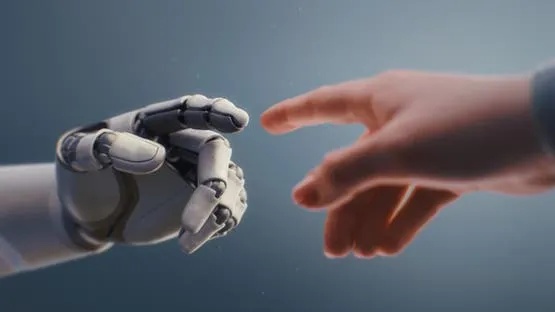
to comprehend and process, making humans "more machine-like." Researchers suggest that the continuous evolution of AI robots, making them more human-like, could create a reciprocal effect; as machines approach human characteristics, humans, in turn, may begin to acquire some traits
of the machines they interact with. The study posits that frequent and intense interaction with these systems could make individuals "more AI-compatible" by gradually reducing spontaneity, individual differences, and unpredictable behaviors. Researcher Inge Toral-Mansfield from the University of Birmingham in the UK
explained that the research explores this phenomenon of reciprocal influence, where "robots become more human-like, and humans become more robot-like," a concept the researchers term "robot-like humanity." The researchers base their warning on AI's growing capability to conduct highly natural conversations.
This blurs the distinctions between humans and machines, making interaction with AI akin to social communication, and potentially even giving AI a more "alive" perception than ever before. Researchers also point out that this interaction can affect how humans perceive
themselves. While human reactions are often characterized by spontaneity and unpredictability, AI responses are closely tied to data, statistics, and algorithms. They add that the innate human tendency to mimic the behavior of others might lead them to imitate the
communication patterns used by robots, further increasing their "robot-likeness."