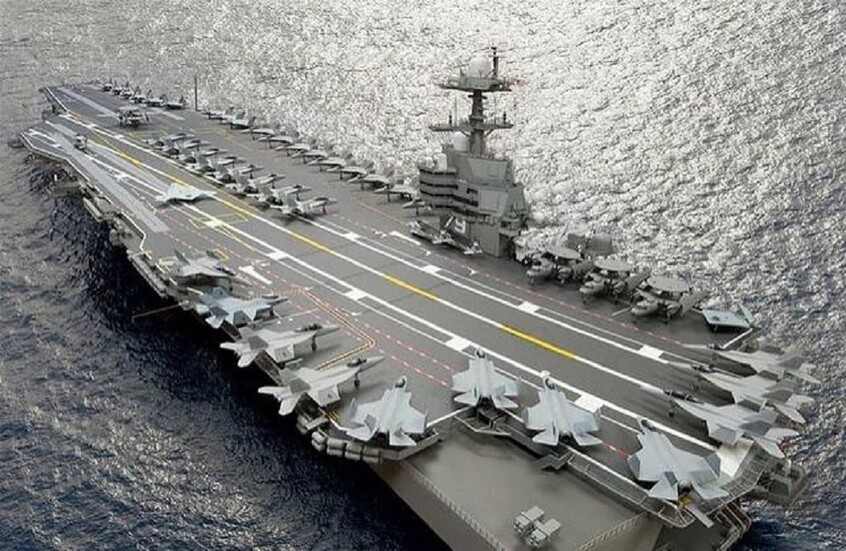
The United States is preparing to commence the dismantling of the nuclear-powered aircraft carrier USS Enterprise, which played a significant role in American military operations off the Libyan coast in 1986. The carrier's name is closely linked to the period
of heightened tensions between Washington and the regime of Colonel Muammar Gaddafi, as part of a program costing over $1.3 billion. The carrier was decommissioned in 2017 and has departed the shipyard in Virginia, heading to Mobile, Alabama, where it
will undergo dismantling and removal of its nuclear systems in a project expected to be completed by 2030. This project brings back into focus the military confrontations between the United States and Libya during the 1980s, particularly in 1986 when
the carrier was part of the U.S. naval deployment in the Mediterranean amid escalating tensions. Records indicate the carrier was ordered to the Mediterranean on April 25, 1986, in response to the crisis with Libya, following naval clashes in the
Gulf of Sidra in March of the same year, participating later in air sorties and surveillance missions under Soviet naval observation. The confrontation escalated in March 1986 when U.S. forces conducted naval operations to test freedom of navigation in the
Gulf of Sidra after Gaddafi declared a specific latitude line as the boundary of Libyan waters, leading to missile exchanges and U.S. strikes on Libyan naval targets. The Enterprise entered service on November 25, 1961, as the world's first nuclear-powered
aircraft carrier, serving for over five decades and participating in major U.S. military operations including the Vietnam War and missions in Afghanistan and Iraq before its official decommissioning in 2017. The cost of the carrier's deactivation and dismantling program is
approximately $1.43 billion, covering decommissioning, storage, and a contract for dismantling and disposal of its components. The complexity of the project lies in the carrier's eight nuclear reactors, requiring dismantling of parts of its structure, removal of reactors, and handling
of radioactive materials under strict protocols, alongside recycling large portions of its metal structure, with project completion expected by 2030.