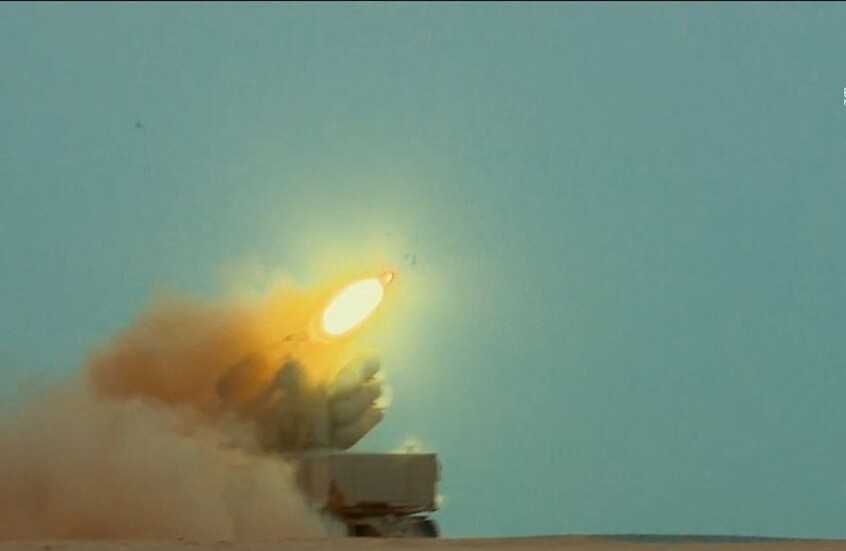
Informed American sources have revealed that President Donald Trump and his senior advisors discussed last week the possibility of carrying out limited military strikes in the Strait of Hormuz, specifically targeting Iran's radar and missile capabilities. According to three American officials,
this plan was developed over the past week by the U.S. Central Command (CENTCOM) and received support from Secretary of War Pete Hegseth. However, the plan has not yet received Trump's final approval, although he may give it the green
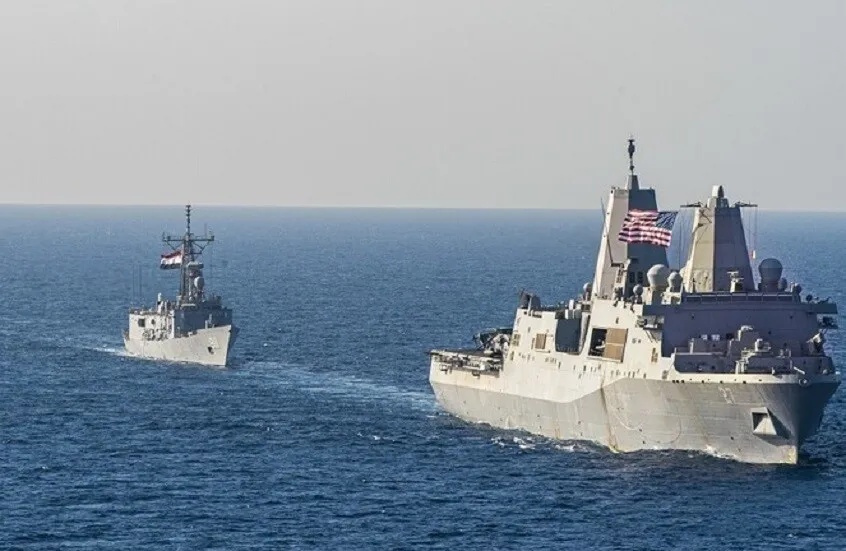
light following the recent escalation with Tehran. These proposals come at a time when the U.S. military has gradually asserted control over most parts of the Strait, thereby reducing Iran's ability to target oil tankers, while simultaneously allowing greater movement and
oil exports through the strategic waterway. An American official indicated that the fundamental idea behind this plan is to 'mow the grass,' meaning to reduce the risk of potential Iranian attacks on oil tankers, U.S. naval vessels, and Air Force aircraft.
Iran's efforts to rebuild its radar, air defense, and anti-ship missile capabilities prompted CENTCOM to act, especially after an incident involving an Iranian anti-aircraft missile launch towards a U.S. F-35 fighter jet that was providing cover for ships in the
Strait. Although this missile did not pose an actual threat, it was seen as an indication of Iran's attempts to restore its military capabilities. U.S. officials added that Hegseth supported the plan and sent it to the White House a few
days ago. The White House had been reluctant last week to approve the strikes to avoid any escalation with Iran. However, recent Iranian ballistic missile attacks on U.S. bases in Jordan on Sunday may change Trump's opinion, as he stated
to Fox News on Monday morning that the United States would respond to the Iranian attacks and 'hit them hard.' These developments coincide with the U.S. administration's previous indication of moving away from large-scale military force against Iran, shifting instead towards
an economic strangulation strategy through sanctions. However, these new plans suggest that the military option remains a tool for pressure, focusing on limited operations aimed at maintaining U.S. superiority in the Strait and preventing Iran from restoring its offensive capabilities.