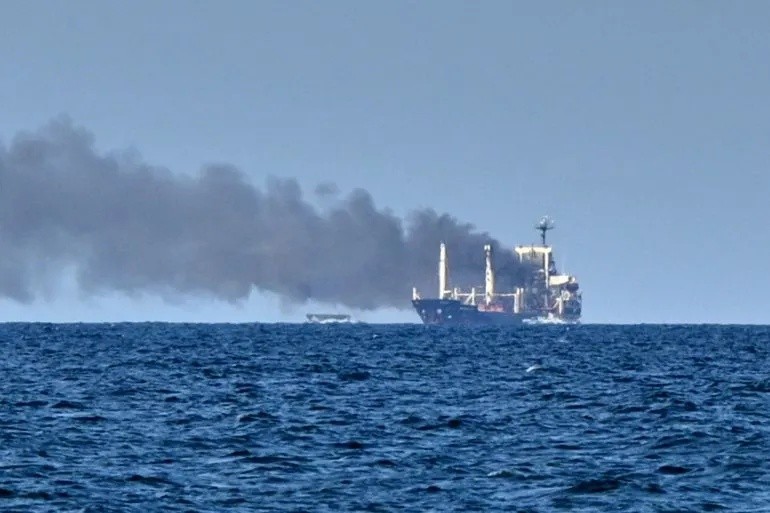
Global food supplies face an escalating threat amidst the intensified mutual attacks between Russia and Ukraine in the Black Sea and Azov Sea regions, targeting commercial vessels and ports for approximately two months. This escalation has led to a significant
reduction in grain exports from both countries, pushing wheat futures to a three-year high, thus portending broad repercussions for global food security. Both Russia and Ukraine are key players in the global grain market, with their combined exports accounting for over
a quarter of total global wheat exports, in addition to their substantial contributions to barley, corn, and sunflower oil production. These current disruptions recall the anxieties of 2022, when extensive Russian military operations in Ukraine effectively halted cargo loading operations
in Ukrainian ports, driving grain prices to unprecedented levels. Although the current impact on prices has not yet reached the same severity as in the past, these developments occur in a highly complex context for the global food sector. In addition
to the ongoing conflict, the disruption of navigation in the Strait of Hormuz, due to the conflict, threatens the flow of fertilizers and other essential inputs vital for farmers. Furthermore, crops in Europe face significant challenges from severe heatwaves causing
wilting, while the "El Niño" climate phenomenon warns of further damage to agricultural production in various regions worldwide. Escalation of Operations in the Black Sea: For months, Russia has targeted Ukrainian grain export infrastructure with intense airstrikes, hitting facilities operated by major
global crop trading companies, such as Bunge Global SA and Archer-Daniels-Midland. In July, Russian forces intensified their campaign, focusing their strikes on cargo ships and key grain export terminals in the Ukrainian cities of Chornomorsk, Odesa, and Pivdennyi. Since then, Ukrainian
ports on the Black Sea have been subjected to almost daily Russian targeting. The strikes have also extended to Ukraine's ports on the Danube River, which have emerged as a vital alternative hub for grain exports after traditional Black Sea
routes were disrupted. These shipments via the Danube were already facing challenges due to low water levels, caused by high summer temperatures. Conflict and Weather Drive Up Crop Prices: As a result of these developments, Ukraine's grain exports have seen a significant
decline, dropping in August to approximately one-fifth of their potential volume, according to statements by Agriculture Minister Taras Vysotskyi. His ministry warned that the country's agricultural shipments during the current season might be less than half of the previously estimated
quantity. The situation does not appear to be any better in Russia, where Ukrainian attacks on Russian ports and vessels in the Black Sea and Azov Sea have almost crippled a vital route that typically handles over 70% of Russian grain
exports. In July, Ukraine struck two major Russian ports on the Azov Sea coast, restricting transit through the Don-Azov Canal, which connects the sea to the Don River, a key Russian waterway. In August, several grain terminals at the country's
main export hub in Novorossiysk ceased operations after suffering extensive damage from a large drone attack. Necessary repairs to these facilities are expected to take several months. Information indicates that Russia possesses the capability to utilize its Baltic Sea ports for
export, but their limited capacity is insufficient to accommodate the approximately 60 million metric tons of grain the country can export in a single season. Russia exported less than half the quantity of wheat in August compared to the same
month last year. A specialized research firm predicted that September exports would fall to their lowest level for that month since 2010. Strategic Importance of the Black Sea Region: There are compelling reasons why Russian military operations in Ukraine in 2022 caused
the largest recorded jump in global food prices. The Black Sea is one of the most important agricultural export corridors in the world, through which a significant share of wheat, corn, and sunflower oil trade passes. Ukrainian ports represent vital
gateways for exports to countries in Africa, the Middle East, and Asia, nations that cannot easily afford higher-priced grains from other regions. Russia is the world's largest wheat exporter, supplying approximately one ton for every six tons traded globally, making uninterrupted
access to the Black Sea corridor critically important for global food markets. Black Sea wheat is typically the cheapest globally, according to commodity expert analyses. It is noted that price-sensitive buyers will either have to reduce their import demand or
face higher costs, pushing global food inflation upwards. Ukrainian Alternative Grain Shipping Corridor: Following Russia's withdrawal in 2023 from an agreement allowing grain exports via the Black Sea, Ukraine established a new maritime corridor for shipping grain and other goods from its
Black Sea ports. To avoid Russian attacks, vessels sail along the Ukrainian coast, then pass through the territorial waters of Romania and Bulgaria, both EU member states, before proceeding through the Bosphorus Strait to the Mediterranean Sea. Market consultants have affirmed
that the market had, until recently, relied on the continuous flow of grain shipments despite the conflict in Ukraine, and that current developments represent a reopening of the original wound caused by the conflict. Mediation Efforts and Russian Rejection: Ukraine offered Russia
a truce to halt attacks on vessels transporting agricultural goods across the Black Sea, but Moscow rejected the agreement because it sought guarantees that its energy infrastructure would not be targeted, according to Ukrainian President Volodymyr Zelenskyy's statements in late
August. Ukrainian drone attacks, among other targets, have struck oil refineries deep inside Russian territory. Russian President Vladimir Putin acknowledged the economic damage resulting from Ukrainian strikes and stated that he rejected ceasefire proposals from Kyiv as "unacceptable," and in
some cases "strange," without providing further details. In contrast, Turkish Foreign Minister Hakan Fidan stated on August 31 that Turkey is in contact with Russia and Ukraine in an attempt to revive the wartime grain deal brokered by the United
Nations. It remains unclear whether these efforts will succeed. Impact of Disruptions on Global Food Prices: International assessments indicate that globally traded food commodity prices are hovering near their highest levels since 2023, but they remain significantly below the peak reached in
the wake of military operations in Ukraine. Grain stocks remain abundant after record harvests in previous years. Romania, Bulgaria, and Serbia serve as useful alternative sources for wheat supplies from the Black Sea region. Nevertheless, these disruptions amplify cumulative pressures in
the global market. Farmers in some countries face shortages and rising prices for fertilizers and fuel due to the repeated closures of the vital trade corridor through the Strait of Hormuz. Weather volatility adds another layer of uncertainty; successive heatwaves
have damaged crops in parts of Europe, leaving farmers with smaller harvests. Damage to corn is likely to make the region more dependent on imports of this crop, which is used as animal feed. In the United States, persistent droughts
in the Great Plains and Corn Belt, two of the country's major agricultural regions, have pushed up prices for staple food commodities. The return of the "El Niño" phenomenon is expected to cause further disruptions to the agricultural sector. Implications for
Ukraine and Russia: Grain represents a primary source of foreign currency for Ukraine, and disruption in the Black Sea means reduced farmer income, increasing pressure on the wartime economy. Faced with challenges in exporting their crops, Russian farmers may reduce winter
crop planting, which will affect global supplies in the future. The situation in the Black Sea region, coupled with climatic challenges, remains a critical factor in determining the trajectory of global food security in the coming months and years.