
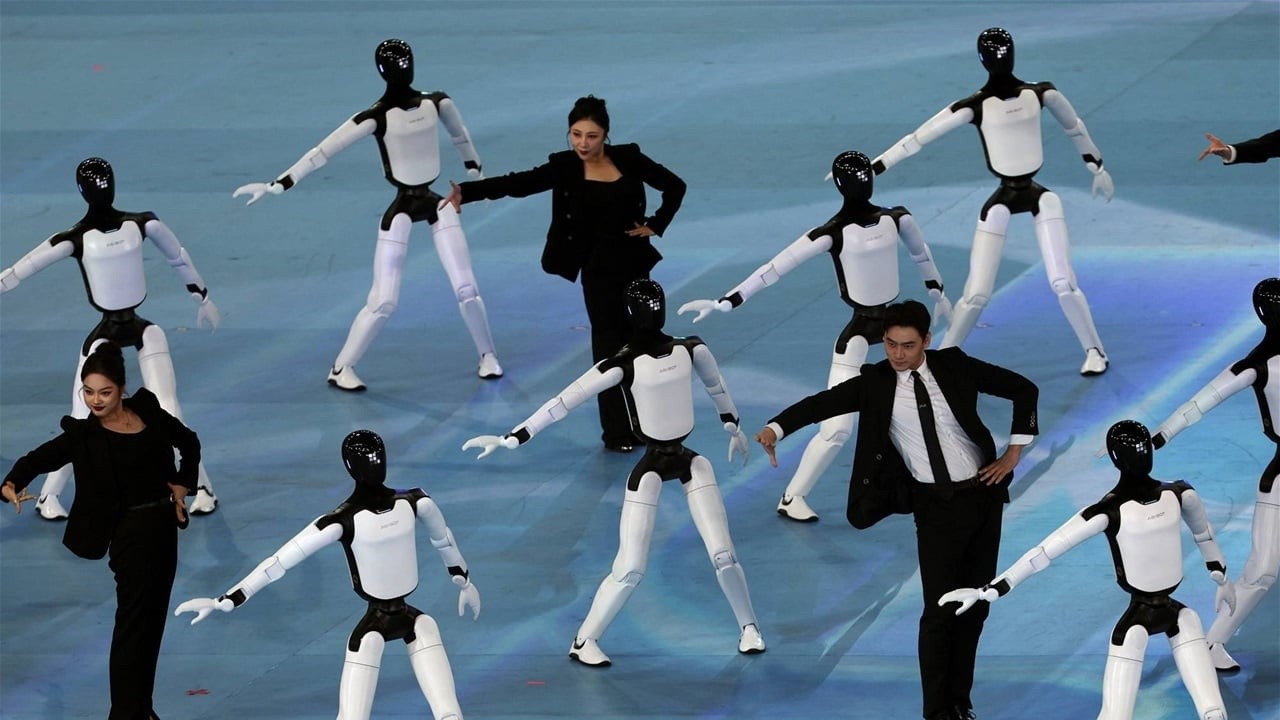
During the World Humanoid Robot Games held in China last month, these machines showcased impressive capabilities in dancing, jumping, and boxing. Some agile robots even outran sprinter Usain Bolt over a 100-meter distance. The audience was captivated by these remarkable
displays, as well as by some humorous stumbles, which garnered widespread amazement and admiration. Just two days after the games concluded, the official newspaper of the People's Liberation Army (PLA) published its own conclusions from the event, calling upon researchers to
accelerate the transfer of these advanced technologies from laboratories to military training grounds, aiming to develop automated "fighters." A review of over 100 Chinese military procurement announcements, academic studies, patent applications, official publications, government records, and defense company documents reveals that
China's defense institutions are accelerating research into military applications for humanoid robots, with plans for their eventual deployment on battlefields. Previously unreported records indicate that military institutions are testing humanoid robots according to battlefield requirements, seeking to acquire the necessary robots
and technologies for their training, and exploring how they can operate alongside human forces. This effort gained significant momentum in 2025 and 2026, focusing on robot perception, maneuverability, and training data. According to Bank of America Global Research, Chinese manufacturers accounted
for approximately 95% of global humanoid robot shipments in 2025. This commercial dominance grants the People's Liberation Army access to a growing industry, facilitating the development of its own military applications. China's research in defense robotics highlights the rapid global evolution
of military technologies. The conflict between Russia and Ukraine demonstrated how semi-autonomous drones, using AI for navigation and targeting, have profoundly transformed reconnaissance and offensive operations, while robots are employed for supply transport and evacuating casualties. The Chinese military's efforts to
learn from Europe's deadliest conflict since World War II have been previously documented. This general development is sparking growing military interest worldwide in autonomous systems. In this context, Dennis Hong, a professor of mechanical and aerospace engineering at the University of
California, Los Angeles, stated: "Going places where we don't want humans to go is one of the most compelling reasons for developing robots." He added: "If losing a robot means avoiding the loss of a human life, then the robot
becomes something expendable." Neither China's Ministry of National Defense nor the National University of Defense Technology, the PLA's leading research institution, has responded to requests for comment regarding the military applications of humanoid robots. As of yet, there is no confirmed evidence
of China deploying an armed humanoid robot within an operational PLA unit. These robots still face significant challenges, notably their high energy consumption and lack of complete reliability outside controlled demonstrations. For his part, Aaron Johnson, a professor of mechanical engineering
at Carnegie Mellon University, noted that battlefields involve numerous variables, challenging robot capabilities in unpredictable ways. Offensive Scenarios in Urban Environments China already possesses detailed conceptualizations for integrating humanoid robots into urban warfare scenarios. One proposed scenario involves distributing six combat robots—including humanoid
models, robotic dogs, and unmanned ground vehicles—among two assault teams. These robots would cooperate with ground forces to clear an enemy-controlled building, advancing floor by floor and room by room. This scenario was detailed in a research paper published in August
2025 by researchers at the National University of Defense Technology's testing center in Xi'an. The study modeled an urban assault force using equipment they anticipated could be available within five to ten years. However, the study did not specify rules
of engagement for the robots, the weapons they would carry, or how they would handle situations involving civilians. In December, the PLA's Eastern Theater Command released AI-generated videos depicting military robots, including humanoid and quadrupedal models, sweeping through Taiwan's defenses in
a hypothetical future conflict. However, China is not alone in exploring the use of robots on battlefields. Last year, the U.S. Army launched a competition to develop "military-oriented humanoid robot capabilities" that could eventually operate alongside soldiers. The Army stated that potential
roles for these robots include reconnaissance, security, obstacle removal, handling hazardous materials, and offensive and defensive missions in urban areas. Despite this, the U.S. robotics industry significantly lags behind China in developing these machines, whether bipedal or quadrupedal. Previous reports indicated
that China's Unitree Robotics, one of the world's leading producers of humanoid and quadrupedal robots, based its best-selling robotic dog designs on innovations funded by the U.S. military. Neither the U.S. Army nor the Department of Defense (Pentagon) offered comment for
this story. Malcolm Davis, an analyst at the Australian Strategic Policy Institute, commented that he does not currently view humanoid robots as practical battlefield systems. However, he predicted: "But in five to ten years, it's very possible that they will be." Finally,
even if these robots currently operate under remote control, the complex ethical dilemmas concerning autonomous systems designed to operate independently will eventually need to be addressed. The challenges of the laws of war require forces to accurately distinguish between combatants
and civilians, and to refrain from attacking the wounded or surrendered fighters – issues that raise serious questions about machines' ability to make such critical decisions.