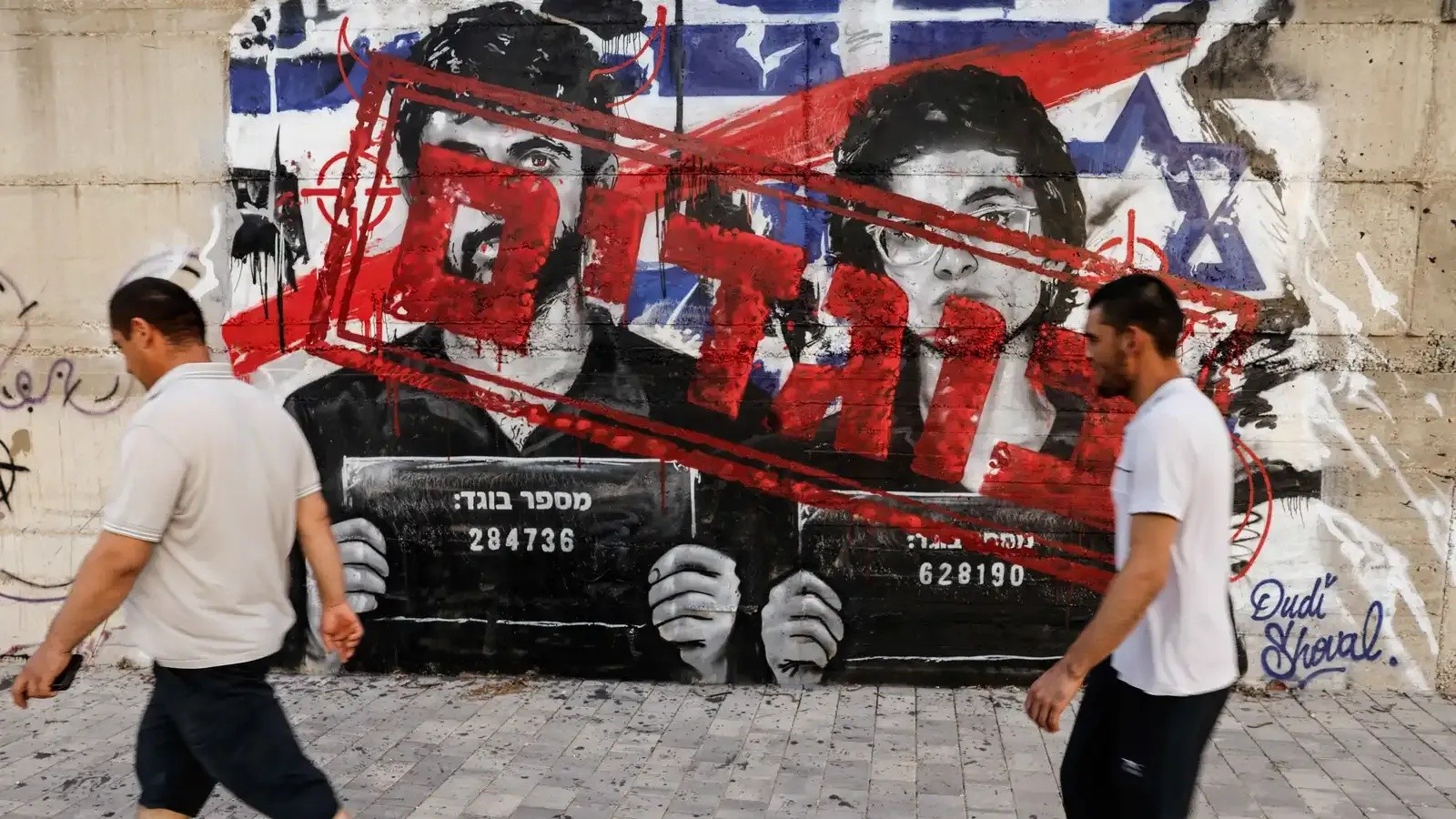
Intense internal debate is gripping Israel over the film "NAGA," an award-winning work at the Venice Film Festival, which focuses on the killing of civilians in Gaza. This controversy, which has transcended mere artistic discussion to become a pivotal political
and media issue, reveals significant sensitivity within the Israeli establishment towards narratives of the war in the Strip and its potential ramifications. Information, uncovered by local media reports, shows a sharp divergence in how the film is being handled, with
security and diplomatic bodies recommending de-escalation, while prominent politicians push for confrontation. Reports indicate that circles within the Prime Minister's Office are contributing to the fueling of this internal debate, capitalizing on political considerations and electoral campaigns. Amidst this, a professional
recommendation emerges for the necessity of de-escalating discussions around the film, out of concern for potential damage to Israel's image in global media. This divergence arises as statements from Israeli officials against the film's creators escalate, placing the state in
a dilemma: between preserving its international image and achieving domestic political gains. A report by Channel 12 Israel revealed recommendations issued by specialized entities within the army and the Ministry of Foreign Affairs, advocating against attacking the film's creators and reducing
media coverage related to it. These recommendations were based on an assessment that the film has not yet garnered widespread international attention and has not led to a wave of protests or official inquiries from foreign governments. These entities believe
that aggressive reactions could shift the discussion from the film's content to accusations against Israel of attempting to silence its critics and restrict freedom of expression. Therefore, they advised avoiding proactive media briefings and handling the issue in an organized,
considered manner, rather than resorting to impulsive responses. However, this diplomatic approach clashes with an entirely different political trajectory, as Israeli ministers and officials continue to escalate their attacks on the film and its producers, calling for the revocation of the
creators' citizenship and an investigation into the sources of information they relied upon. These recommendations highlight a striking paradox; while the military establishment prefers to minimize attention to the film as the optimal way to deal with it, many political and
security figures are moving towards escalation. This approach is based on an analysis that the film has not yet risen to the level of a widespread international issue, and that intensifying attacks on it could grant it greater fame than
it originally achieved, as well as allowing Israel's critics to shift the debate to the issue of freedom of expression. Nevertheless, this recommendation does not imply the military establishment's acceptance of the film's content, but rather reflects a different strategy
for assessing how to contain the resulting media and political damage. It is worth noting that "NAGA" is an Israeli abbreviation for "Collateral Damage." The documentary film, directed by Israelis Yuval Abraham and Rachel Zuer, relies on the testimonies of 24
soldiers and former intelligence officials who served in Gaza. The work addresses sensitive issues related to the mechanisms for selecting military targets, the use of AI-based systems in targeting operations, and pre-strike estimates of potential civilian casualties. Among the most
controversial points raised by the film is a reference to a specific strike that was expected to result in the death of approximately 500 civilians. In contrast, the Israeli army categorically denies this narrative, affirming that targeting decisions are not
made independently by AI systems, and that the final decision remains in human hands. The army also unequivocally rejected claims regarding the strike that was predicted to kill 500 civilians. This film, which garnered the Special Jury Prize at the Venice
Film Festival and attracted international attention, is affirmed by its creators to be based on verified testimonies from their Israeli sources, who preferred to remain anonymous. Thus, the dispute has transformed from a mere evaluation of a documentary work into
a deeper debate touching upon the essence of the war itself, the mechanisms of targeting decisions, and the limits of internal criticism directed at the military establishment within Israel. While the Israeli army seeks to address the film by refuting what
it describes as false and misleading claims, and by providing detailed explanations of targeting decision-making mechanisms, Prime Minister Benjamin Netanyahu has chosen a more confrontational path. Netanyahu launched a fierce attack on the film and its creators, describing it as
"shocking incitement." The political discussion evolved to include measures that could affect the legal status of the directors. For his part, Israeli Culture Minister Miki Zohar had called for an investigation into how the filmmakers obtained their material, and whether
obtaining classified information could constitute a legal violation, before the political discourse escalated to the point of threatening citizenship revocation. Netanyahu, meanwhile, warned of potential legislative measures related to revoking citizenship and imposing financial penalties on those he describes as
"distorting the image of soldiers or the state." These developments are part of a broader political discussion within Israel, which is no longer limited to the accuracy of the events mentioned in the film but has extended to how the
government deals with Israeli artistic production that criticizes the army's performance during the war. This debate reflects a deep internal conflict in Israel between two conflicting approaches: the first adopts a vision focused on international relations and managing the state's media
image, while the second treats the issue as a purely internal political matter connected to the war, the army, and electoral considerations. The debate within Israel was not confined to governmental and military circles but extended to the cultural sphere,
where more than 700 workers in the Israeli film sector defended the film's creators and their right to freedom of expression, while the two directors faced a barrage of criticism and threats from right-wing circles. Despite all the controversy sparked by
the work, the film has not yet been widely screened within Israel, even though it won an international award. Its creators have called for the film to be watched before judgments are made, emphasizing that the core importance of the
work lies in the authentic testimonies of the soldiers and officers who appear in it, which seek to shed light on aspects of the war's reality.