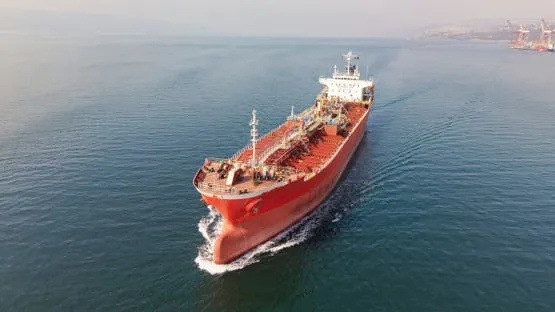
Oil prices declined today, Thursday, continuing their downward trend of several days, amidst hopes that upcoming talks between Iran and Qatar might pave the way for opening the strategic Strait of Hormuz, thereby reducing supply disruptions stemming from the conflict
in the Middle East. Brent crude futures saw a decline of 40 cents, or 0.46%, reaching $87.44 per barrel, marking its fourth consecutive day of decrease. West Texas Intermediate (WTI) crude futures also fell by 43 cents, a 0.52% drop,
settling at $81.80 per barrel, continuing its decline for the fifth consecutive day. In a related development, a senior Iranian source stated yesterday, Wednesday, that Iran and Oman are finalizing details of an agreement concerning the Strait of Hormuz. This follows
an announcement by the Iranian Revolutionary Guard that the two countries had agreed on how to share the vital waterway that connects major Gulf oil producers to global markets. Before the outbreak of the American-Israeli war against Iran on February
28, the passage facilitated the transit of oil and natural gas shipments equivalent to approximately one-fifth of global consumption. However, ship tracking data indicates that flows have dropped to about a quarter of their pre-conflict levels. The Qatari Prime Minister is
scheduled to travel to Iran today, Thursday, in an effort to re-launch diplomatic talks aimed at ending the six-month-long conflict. Although the United States halted its attacks on Iran about a month ago and is now moving to impose greater
economic pressure, the positions of both countries remain far apart regarding the conditions for ending the war. Iranian officials emphasize that the Strait of Hormuz will not be opened unless the United States meets Tehran's conditions stipulated in a temporary
ceasefire agreement reached in June, which subsequently collapsed.