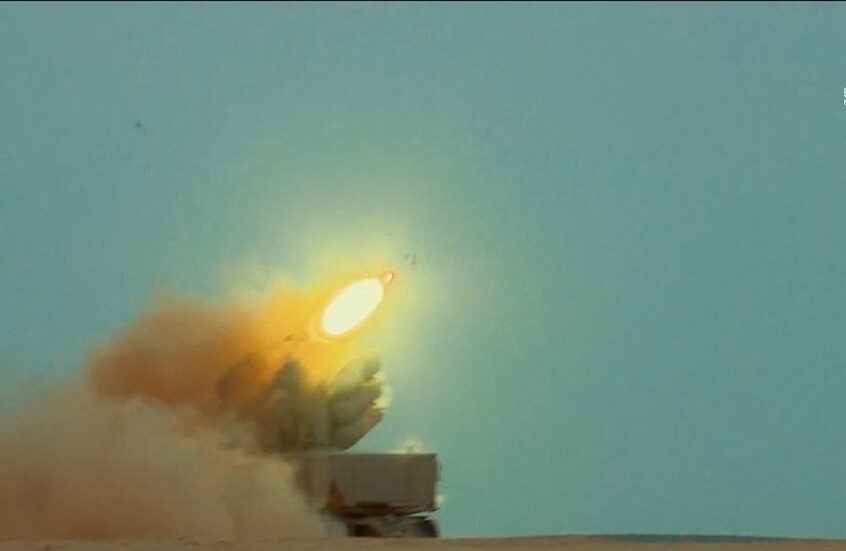
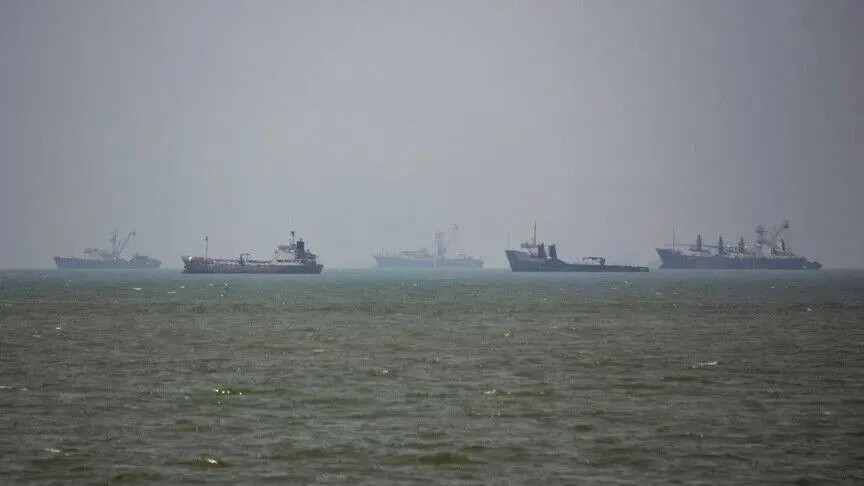
Maritime navigation witnessed notable developments as the highest rate of Iranian attacks against vessels within the Strait of Hormuz and its surrounding areas was recorded since the onset of military operations on the twenty-ighth of February, coinciding with the documentation
of six commercial vessels targeted within a single day, based on data issued by the United Kingdom Maritime Trade Operations alongside multiple international maritime security entities. Field reports indicated that the tally of commercial vessels subjected to hostile Iranian acts
exceeded eighteen ships during the first twelve days of October, with yesterday alone accounting for six of them. Between the fifth and twelfth of the same month, at least fourteen cases involving attacks, attempted targeting, and direct interceptions were monitored
in the waterway and its immediate surroundings. Official data and statements issued by the Iranian Revolutionary Guard confirm a marked escalation in the pace of operations directed against commercial ships since the return of military confrontations between Tehran and Washington
last July. During July, at least twelve attacks targeting oil tankers and cargo ships were recorded, while attacks hit ten other ships during August, including oil and liquefied natural gas tankers off the coasts of Fujairah, UAE, and Sohar, Oman.
By September, the number rose to eighteen ships, in parallel with the recourse of the United States and several Gulf countries to ship to ship transfer mechanisms, relying on smaller marine vessels to transport crude before loading it onto massive
tankers inside areas enjoying greater security. Conversely, the Iranian Revolutionary Guard leadership described these activities as illegal oil smuggling operations and failed attempts to break the blockade imposed on Hormuz, which prompted it to expand the circle of its field
operations to include supply ships, boats, tugs, and small tanker vessels across Gulf waters. The Revolutionary Guard also noted that some targeted marine units were exposed to a series of explosions resulting from collisions with sea mines during their navigation
along routes described by Iranian authorities as illegal and unsafe. Tehran considers that intensifying its naval operations represents a direct response to what it describes as the naval blockade imposed by the United States, warning navigation parties against sailing via
unapproved routes or attempting transit after turning off guidance and identification systems. It is worth noting that since last April, Tehran has imposed a package of restrictions organizing navigation in the strait, including designating mandatory transit routes and stipulating prior
coordination with the naval forces of the Revolutionary Guard. In late May, the announcement was made obliging all transits to obtain prior permission, accompanied by strict warnings that any attempt to cross without an official permit will be treated as
a direct security threat. These field developments are taking place against the backdrop of ongoing tensions bringing together the Iranian and American sides regarding control over navigation in the prominent strategic corridor for global energy supplies and essential commodities, which
in turn represents one of the most prominent pending negotiation files. Military operations had erupted following mutual attacks launched by the United States and Israel against Iran in late February, followed by the declaration of a temporary ceasefire in April,
before clashes renewed due to the stumbling of the negotiation path despite the signing of a memorandum of understanding by the two parties in mid June.