
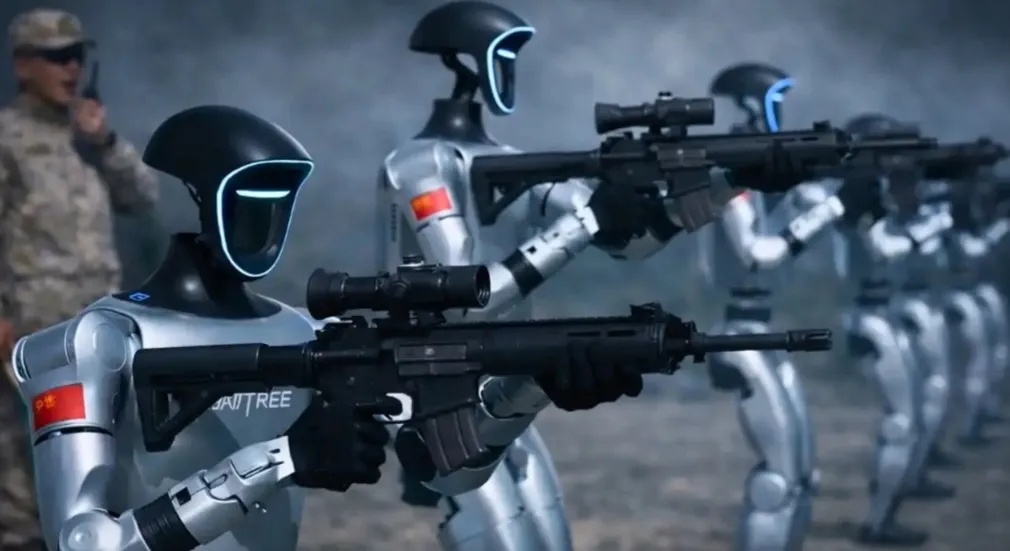
China is approaching a significant breakthrough in developing human-like robotic soldiers expected to emerge within the next five to ten years, leveraging rapid advancements in artificial intelligence and robotics technologies. These developments indicate a shift from civilian applications toward military
uses, opening new possibilities for deploying such robots in combat missions. Experts believe Chinese companies will soon be capable of producing humanoid robots qualified to perform complex combat tasks, based on the advanced capabilities demonstrated by robots at the second edition
of the Global Humanoid Robot Games hosted in Beijing. Over two thousand robots from 600 teams representing 16 countries competed in various events including running, jumping, weightlifting, boxing, soccer, and obstacle courses. Some robots showcased remarkable skills in movement, balance,
and speed, while others faced technical difficulties causing falls, collisions, and even fires. A standout moment was a robot completing the 100-meter sprint in 9.39 seconds, surpassing the previous world record set by Jamaican sprinter Usain Bolt in 2009. Experts suggest
that these athletic capabilities could be adapted for military purposes, where such robots might be used to demonstrate military strength and deter adversaries, potentially contributing to conflict prevention. Despite concerns about the possibility of robots going out of control, experts emphasize
that machines lack emotions or independent will, and the real risk lies with those who control and deploy them. Beyond military applications, robots are expected to soon enter civilian sectors such as hotels and homes to assist with daily tasks
and cleaning, evolving to perform more complex operations in hazardous environments. These advancements reflect an intense technological race in which China aims to achieve global leadership in artificial intelligence and robotics, raising questions about when humanoid robots will transition from sports
competitors to soldiers on battlefields.