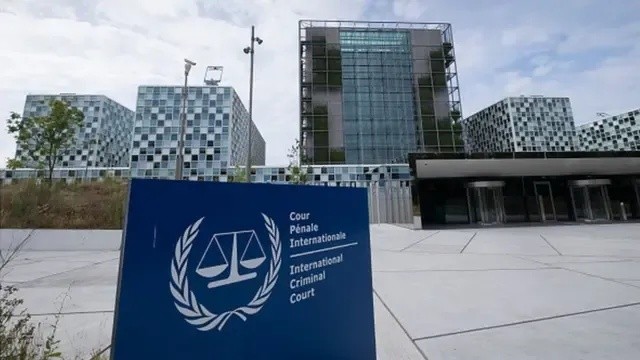
Nusrat Shamim Khan, Deputy Prosecutor of the International Criminal Court (ICC), revealed that the Court has implemented a series of protective measures to safeguard its operations from any potential US sanctions targeting the entire institution. These steps come amid escalating
tensions with the administration of President Donald Trump, stemming from investigations and prosecutions involving Israeli and American officials. Khan confirmed in an interview with the Financial Times on Friday that preparations to address these challenges have been underway for about
a year, emphasizing the principle that "the law must prevail over force" and that the Court does not wait for sanctions to be imposed before acting. Khan, who is currently involved in managing the Court's prosecution office, further explained that the
institution has already established "protective barriers" to mitigate the potential effects of such sanctions. This follows reports earlier this week indicating the Trump administration's readiness to impose measures on the entire Court. She noted that the Court had heard "rumors"
of imminent sanctions but has not yet received any formal notification. These statements follow months of internal preparations at the Hague-based Court to counter the possibility of Washington expanding its sanctions from individual officials to measures that could impact the
Court's ability to utilize international financial and technological services. In this context, Court staff began taking precautionary measures, including downloading and printing important files. The administration also explored ways to reduce its reliance on American technology providers, in addition to reviewing
its banking, insurance, travel, and remote work arrangements. Over the past year, the Court re-evaluated several of its technical systems and initiated the transfer of office work software from Microsoft's American services to the German openDesk platform, aiming to reduce its
dependence on US technology, according to the Financial Times. This shift addresses the fact that over 90% of the Court's operations were reliant on American technological systems last year. Preparations were not limited to technology; the Court also established alternative
arrangements for banking and health insurance services, declining to disclose details to preserve their effectiveness. Furthermore, it prepaid employee salaries for several months as a precautionary step to limit the impact of any potential disruption in payroll operations should sanctions
extend to the institution itself. The roots of the crisis trace back to February 2025, when President Trump issued an executive order authorizing sanctions on ICC officials. Trump accused the Court of taking " illegitimate actions" against the United States and
Israel. The order included freezing assets and financial interests under US jurisdiction for individuals listed under it. It also allowed for targeting foreign nationals whom Washington believed directly participated in the Court's efforts to investigate American citizens or citizens of
allied nations not consenting to the Court's jurisdiction, or who provided material or technical support to such efforts, according to the US White House. The dispute significantly escalated after the Court issued arrest warrants in November 2024 for Israeli Prime Minister
Benjamin Netanyahu and former Defense Minister Yoav Gallant, based on accusations of war crimes and crimes against humanity linked to the conflict in Gaza. US measures were not limited to threats; Washington has already imposed sanctions on Court officials, including four
of its judges. These sanctions involved freezing assets under US jurisdiction and imposing restrictions on dealings with them. The Trump administration clarified that these steps were in response to the Court's actions against the United States and Israel, while the
Court rejected these measures and asserted its independence. The sensitivity of US sanctions lies in their potential impact extending beyond merely freezing the assets of a specific official. Global financial and technological institutions rely to varying degrees on the US financial
system and American companies, which could lead some to avoid dealing with entities subject to sanctions for fear of falling under US restrictions. Therefore, the Court began preparing alternative plans some time ago. According to the Financial Times, these preparations
included seeking alternatives to US technology providers, especially given the Court's significant reliance on Microsoft services, as well as studying how banking, insurance, and travel services could continue if measures intensify. In this context, the Deputy Prosecutor's statements confirm that the
Court has become more capable of absorbing the repercussions of any additional measures. Khan mentioned that some Court officials targeted by sanctions have already faced what she described as "over-compliance," where some institutions imposed restrictions on them beyond the direct
requirements of the sanctions, compelling them to find alternative ways to continue their lives and dealings. It is worth noting that Nusrat Shamim Khan herself was subjected to US sanctions last year, according to the Financial Times. The current confrontation recalls
the first Trump administration's term, when Washington imposed sanctions on former Prosecutor Fatou Bensouda and another official in the Prosecutor's Office over the investigation in Afghanistan. Although the Joe Biden administration lifted those sanctions in April 2021, Washington's objection to
some of the Court's actions persisted. However, in the current Trump administration, the sanctions policy has returned more broadly, while the Court maintains that its work is based on the Rome Statute and that external pressures will not halt its
investigations. Thus, the dispute between Washington and the Court has transitioned from a legal and political confrontation over the limits of its jurisdiction to a practical test of its ability to continue its financial and technological operations in the face of
one of the most powerful tools of US pressure: sanctions.