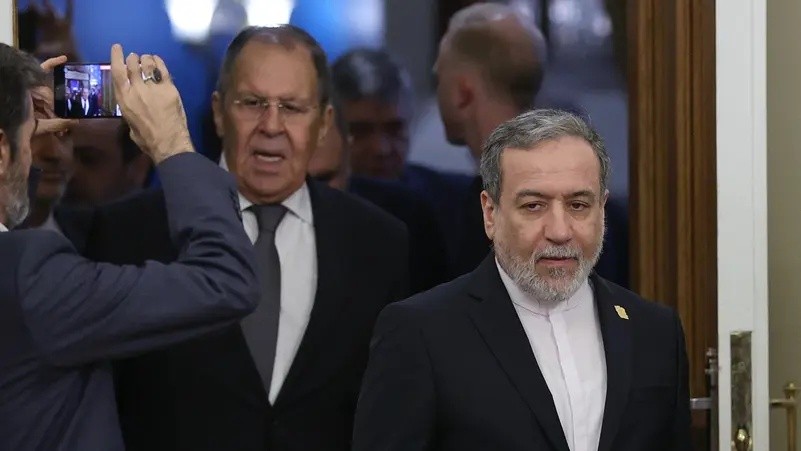
Russian Foreign Minister Sergey Lavrov has arrived in the Iranian capital, Tehran, on an official visit that marks his first trip there since February 2025, to hold intensive talks with his Iranian counterpart, Abbas Araghchi, focusing on ways to advance
regional de-escalation. The Russian top diplomat's agenda also includes a scheduled meeting later today, Monday, with Iranian President Masoud Pezeshkian. Taking practical steps to strengthen comprehensive strategic partnership between Moscow and Tehran will occupy a prominent place during these official
meetings. Furthermore, the Russian diplomat is expected to brief Iranian officials on the key outcomes of his recent discussions with representatives of the Gulf Cooperation Council during his initial stop in Manama. In a related context, the Russian minister had
stressed on Sunday from the Bahraini capital the importance of reviving the Islamabad agreement signed between the Iranian and American sides last June, which collapsed during the first week of July. He pointed out that his current diplomatic moves aim
to prevent a large-scale military confrontation, amid the current deadlock affecting dialogue between Tehran and Washington. Moscow maintains close ties with Tehran across multiple areas of cooperation, including economic and military sectors that have witnessed notable growth since the beginning
of Russian military operations in Ukraine in early 2022, alongside Moscow being among the first parties to express opposition to military escalation against Iran last February, in addition to its balanced relations with Gulf countries. The Russian leadership has repeatedly
expressed readiness to act as a mediator and facilitate communication channels between Washington and Tehran, particularly through proposing to host enriched uranium inventories from inside Iran. It is worth noting that the aforementioned agreement had been concluded as a memorandum
of understanding mediated by Pakistan before collapsing in July with the resumption of vessel attacks in the Strait of Hormuz and subsequent US military responses. Iran insists on controlling maritime traffic in the strategic Strait of Hormuz for energy supplies
and targeting unauthorized vessels attempting passage, while US forces continue to impose a strict naval blockade on Iranian ports and escort oil tankers transiting the waterway.