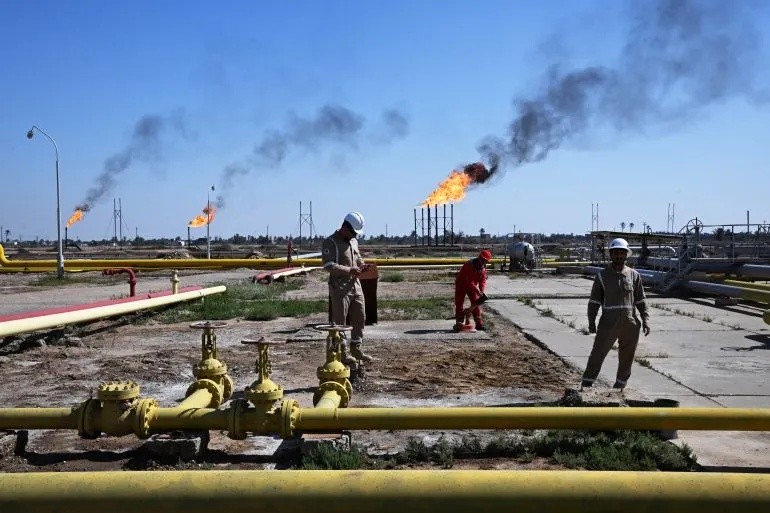
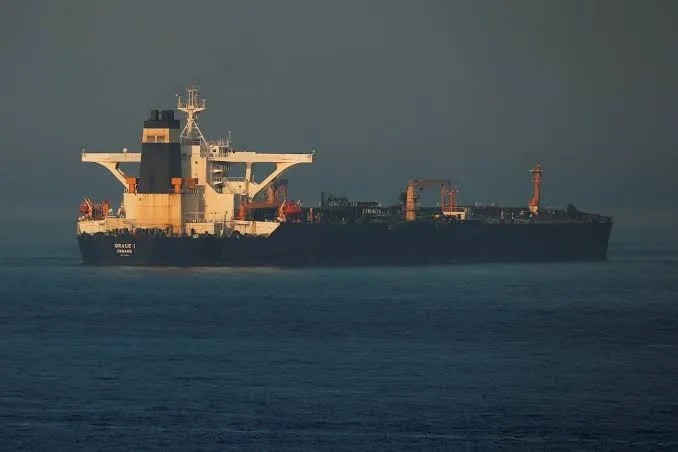
Iranian crude oil exports have virtually vanished from the international market, as a confluence of factors has crippled Tehran's ability to transport its oil through the Gulf of Oman to global consumers. The intensified US naval blockade, coupled with stringent,
ongoing sanctions and months of targeted attacks, has tightened its grip on the vital artery of Iran's economy. According to vessel tracking data provided by "Tanker Trackers," not a single barrel of Iranian crude oil has managed to cross the US
naval blockade line between the Gulf of Oman and the Arabian Sea over the past sixty days. Separately, Reuters indicated that US restrictions on Iran-related shipping have effectively halted Iranian crude oil exports since their re-imposition in mid-July. The US Central
Command has affirmed that this blockade specifically targets shipments linked to Iranian ports, with the primary objective of cutting off oil flows from Tehran, while simultaneously emphasizing the preservation of freedom of navigation for all other commercial traffic across the
Gulf region. Curiously, this sharp decline in exports has not been accompanied by a massive accumulation of oil in storage, which would typically be expected when a major producer suddenly loses access to foreign buyers. "Tanker Trackers" estimates suggest that Iranian
crude oil production levels have contracted to closely match domestic consumption and refining needs, leaving only a relatively small surplus available for storage. This development implies that the collapse in exports has coincided with a significant drop in production, rather
than merely a backlog of barrels within Iranian ports. The naval blockade is merely one component of a broader series of US efforts aimed at drying up Iran's oil revenue streams. For months, the US Treasury Department has focused its attention
on Iran's informal fleet, oil traders, shipping companies, financial intermediaries, and even foreign buyers. In April, the Department imposed sanctions on China's "Hengli Petrochemical" refinery, along with approximately forty shipping companies and vessels, asserting that this network provided a vital
financial lifeline to the Iranian oil industry. In July, the US Treasury expanded its campaign against Mohammed Hussein Shamkhani's shipping empire, identifying over fifty individuals, companies, and vessels implicated in the Iranian oil trade and attempts to evade sanctions. Washington did
not stop there, escalating its campaign again in August through what it termed "Operation Economic Outcast," which broadened the scope of sanctions to encompass the shipping sector and other related industries, targeting networks accused of transporting Iranian crude oil and
petroleum products. The US Treasury directly threatened vessels it claimed had transported millions of barrels of Iranian oil to China and other markets. The Department continued its campaign through September, clarifying that its wider operations aim to sever the financial
channels utilized by Iran for oil smuggling and sanctions evasion. This pressure gains critical importance given that oil remains one of Iran's primary sources of foreign exchange earnings. The US Treasury Department has repeatedly characterized Iranian oil sales as a crucial
financial lifeline supporting both the government and the armed forces. The naval blockade has brought about a fundamental shift in the economic dynamics of Iranian oil exports. While Iran retains its capacity to produce crude oil and supply its domestic refineries,
the challenge of transferring surplus quantities to international waters has significantly exacerbated. Oil tankers attempting to breach the blockade face a range of risks, including interception, attack, and exposure to sanctions, in addition to the potential loss of insurance coverage
or essential financial services. This reality partly explains Tehran's increasing reliance on unconventional shipping arrangements and the efforts of some Iran-affiliated vessels to conceal their movements. The impact of this pressure has not been confined to oil exports alone but has
extended to Iran's broader maritime trade. On September 10, Tehran announced a temporary suspension of the 10% shipping fees previously imposed on foreign vessels transporting oil, gas, and petroleum products to and from Iran. Reuters reported that this measure aims
to reduce shipping costs, thereby incentivizing foreign vessels to continue serving Iranian trade amidst the imposition of the US naval blockade.