A non-public Russian government document, recently obtained, has revealed Moscow's efforts to deepen its relationship with Iran beyond traditional trade frameworks. The plan outlines paths for establishing alternative financial channels, expanding nuclear cooperation, supporting Iran's production of Russian aircraft components,
executing major energy projects, and developing new transportation routes extending towards the Arabian Gulf. Titled "Plan for Cooperation between the Russian Federation and the Islamic Republic of Iran for the Period 2024-2026," the document meticulously identifies the ministries, agencies, and state-owned
companies responsible for various projects, setting deadlines that extend until the end of 2026. In her analysis of the document, Kitty Kurick, a research analyst for the Russia Program at the Foundation for Defense of Democracies, noted that the document's significance
lies not in any single project but rather in the comprehensive structure Moscow is attempting to build around this strategic relationship. Kurick explained that "the roadmap is not radically revealing: those closely following the Russia-Iran relationship will recognize many aspects
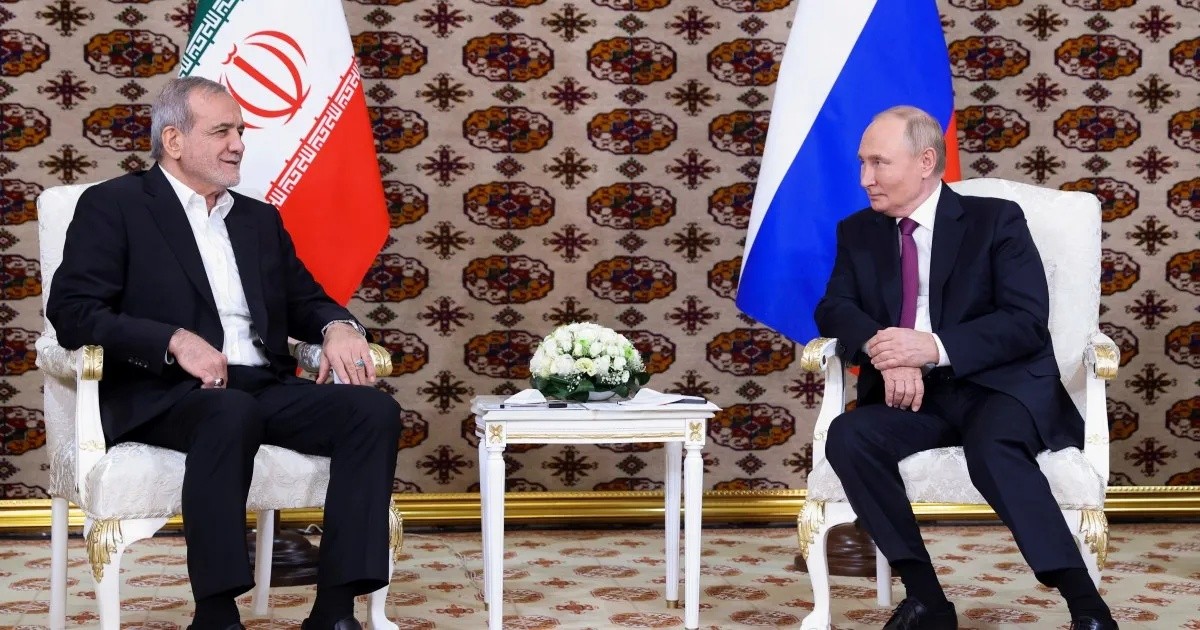
of cooperation between the two countries that have been public for years." An expert suggests that Russian President Vladimir Putin and Iran "desperately need each other," while Russia has expressed its support for the Iranian regime. The document predates the current
conflict involving Iran and the United States by over a year, meaning it does not detail projects currently active or how the conflict has impacted Moscow's plans. However, an independent review of the Russian-language document, combined with subsequent public reports,
indicates that several initiatives described in the roadmap have since advanced or been realized. Regarding circumventing U.S. sanctions, a European intelligence source who reviewed the materials stated that "these are high-level, non-public documents illustrating comprehensive cooperation between Russia and Iran." The
source added that "it is also strategic, sensitive, and highly political in nature, focusing on areas such as nuclear programs, energy trade, and financial transactions aimed at evading U.S. sanctions." In an unofficial response to inquiries regarding the financial provisions in
the document, a U.S. official indicated that U.S. sanctions have "severely isolated Russia and Iran from the international financial system," adding that the two countries' efforts to develop alternative financial channels and other schemes to circumvent sanctions are "not surprising."
The official affirmed that Washington closely monitors attempts by sanctioned jurisdictions to develop alternative cross-border payment mechanisms and will seek to disrupt those that facilitate sanctions evasion or illicit financing. The Russian document itself does not explicitly use the phrase "sanctions
evasion." Instead, it repeatedly calls for increased use of national currencies and independent financial channels, and for measures to counter what Moscow describes as "unilateral restrictive measures." **Building Financial Channels Outside Western Systems** Some of the clearest provisions in the document concern
how Russia and Iran intend to transfer funds. The plan targets an increase in the share of bilateral trade conducted in national currencies from 68% in 2024 to 71% by 2026, while also seeking to expand correspondent accounts denominated in
national currencies. More ambitiously, the roadmap calls for the Bank of Russia and the Central Bank of Iran to develop the use of central bank digital currencies in cross-border settlements. Another clause stipulates "ensuring the use of independent systems for financial
messaging," including connecting financial institutions to independent channels for exchanging financial information. The document does not specify which messaging system will be used or explicitly state that the goal is to bypass SWIFT or U.S. financial controls. Nevertheless, some of
this financial integration has since become public. In February 2025, Russian Deputy Prime Minister Alexei Overchuk announced that Russia and Iran had "almost completely" converted bilateral settlements to national currencies using their own systems for financial and banking messaging. It was
noted that this effort is part of a broader drive towards an independent payment infrastructure between the two countries. Iran's ambassador to Russia also stated in February 2025 that Tehran and Moscow no longer require the SWIFT system for bilateral
banking relations, instead using their own confidential banking messaging systems. He added that the first phase of connecting Iran's "Shetab" payment network to Russia's "Mir" system had begun the previous year. Commenting on these measures, analyst Kurick believes their importance is
cumulative. She stated that "individually, none of these initiatives are transformative. But collectively, they constitute an attempt to remove individual vulnerabilities and build redundancy in the economic relationship between Russia and Iran." **Financial Endeavor Coupled with Political Effort** The roadmap calls for
Russia and Iran to coordinate through BRICS and other international institutions against "unilateral trade restrictions," while another clause proposes studying ways to counter "unilateral restrictive measures" and their impact on global markets. Kurick elaborated that this approach goes beyond merely
finding alternative solutions, asserting that the roadmap "also transcends practical solutions to sanctions and includes an effort to build an intellectual and diplomatic campaign against the sanctions themselves," referring to plans for expert communities, discussion platforms, and an international forum
focused on unilateral restrictions. In a related context, a U.S. official indicated that financial institutions and intermediaries facilitating sanctions evasion expose themselves to "significant sanctions risk," adding that Washington will continue to work with partners to "identify, expose, and disrupt these
networks wherever they emerge." The official also rejected the notion that alternative Russian-Iranian systems could replace Western financial infrastructure, stating: "Russia and Iran can try to build alternative financial channels, but they cannot replicate the reach, liquidity, and trust that
the U.S. dollar and the international financial system command. Their efforts will not undermine the effectiveness of U.S. sanctions." **Rosatom and the Iranian Nuclear Sector** The financial structure is integrated with another strategically sensitive pillar of the bilateral relationship: civil nuclear energy.
The plan stipulates the continued responsibility of Russia's state nuclear corporation "Rosatom" at Iran's Bushehr Nuclear Power Plant, including fuel support and maintenance for Unit 1 and ongoing construction related to Units 2 and 3. This cooperation has not been
limited to paper. On September 2, 2026, "Rosatom" announced that Russian experts had begun returning to Bushehr, and Unit 1 was preparing for routine maintenance and partial fuel replacement, with nuclear fuel already delivered to the site. Rosatom also confirmed ongoing
work at the plant and anticipated the arrival of more Russian experts. Kurick noted that the Bushehr Units 2 and 3 project predates the 2024 roadmap, implying that the document did not initiate this cooperation but rather integrated an existing
strategic project into the broader framework between Russia and Iran. According to a European intelligence source, "these strategies and protocols confirm that Russia and Iran are closely allied nations, and Russia will almost certainly continue its current cooperation with Iran and
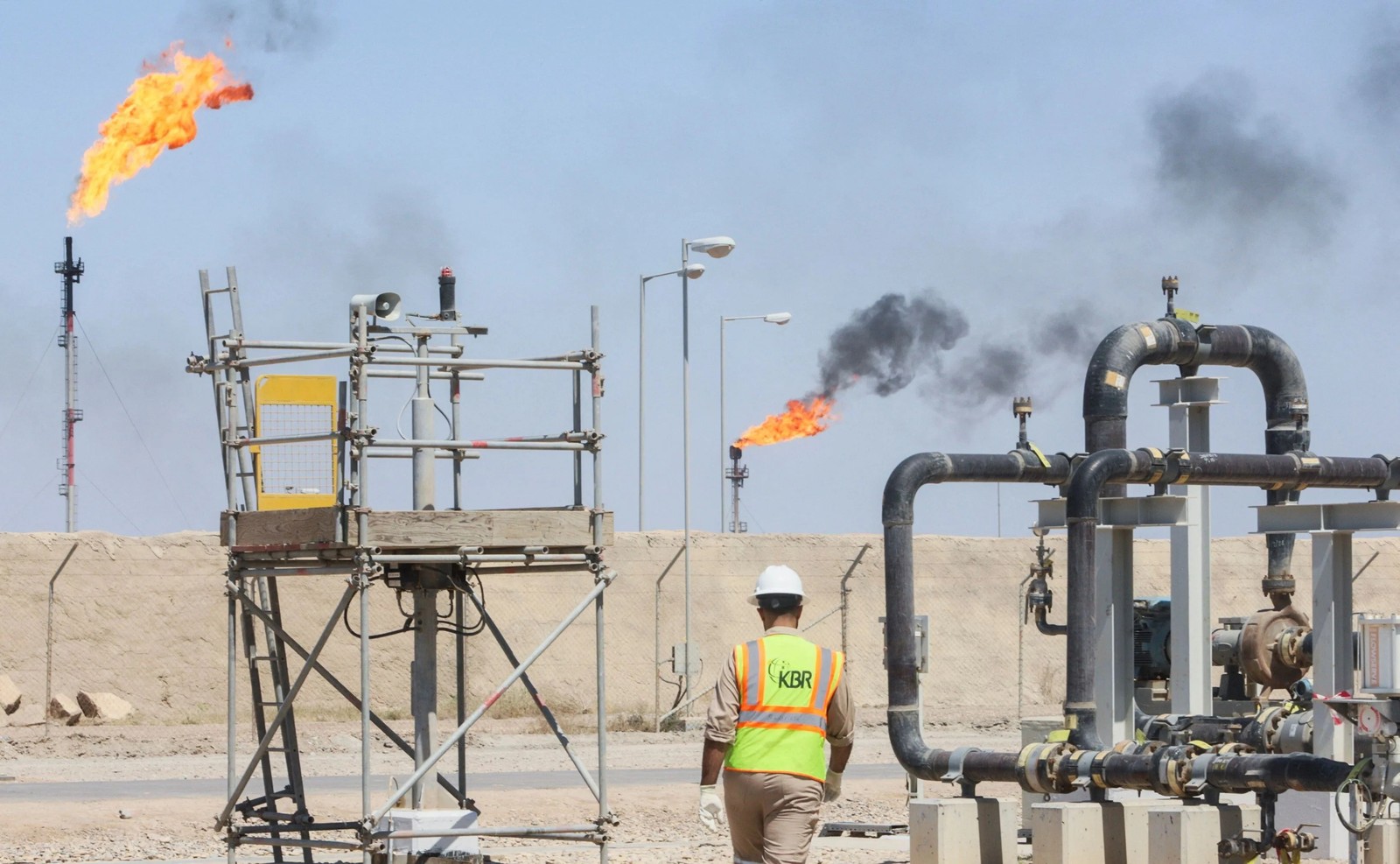
seek to increase it until 2026." The document designates the Shadegan, Kish, and North Pars areas for energy sector cooperation, assigning responsibility for developing these projects to the Russian Ministry of Energy and unspecified "interested Russian companies." The names of
these companies were not mentioned in the roadmap, and for many projects, the funding section was marked "secret." There is evidence that at least one of the mentioned projects has advanced. On February 13, 2026, it was reported that the Russian
state-owned company ZN-Vostok was working on developing Iran's Shadegan oil field, while Iranian officials stated that Tehran hopes to expand Russian investments to include additional oil and gas projects. The roadmap outlines key milestones for the Shadegan project until the
end of 2025, while work related to the Kish and North Pars projects extends until 2026, encompassing legal, commercial, and analytical project activities. This pattern recurs throughout the document: ministries, deadlines, and strategic objectives are identified, while some participating companies
or funding arrangements remain undisclosed. **Russian Aircraft Components... "Made in Iran"** The roadmap calls for Russia to assist in establishing production in Iran for individual parts and assemblies of Russian aircraft. Russian authorities were instructed to identify aircraft parts that could be
repaired or manufactured in Iran, determine capable Iranian companies, approve selected sites through the Russian aviation regulator (Rosaviatsiya), and conclude a localization agreement. The roadmap set a deadline of March 31, 2026, for reaching an agreement on local production, and
a target date of December 31, 2026, for launching prototype production. Public evidence suggests that aviation cooperation has indeed progressed, particularly in aircraft maintenance. **A Southern Trade Route** The document also outlines efforts to strengthen the physical transportation network connecting Russia and
Iran. It calls for work on a proposed railway line built to the Russian track gauge of 1520 millimeters, extending from Iran's border with Azerbaijan towards Iranian ports on the Arabian Gulf. This proposal remained in the planning and negotiation
phase within the roadmap. In a separate context, Moscow sought to develop the Rasht-Astara railway line, a missing link approximately 162 kilometers long in the International North-South Transport Corridor. This project has since moved beyond the purely conceptual stage. The Russian
Ministry of Transport announced that Russia and Iran officially launched engineering studies for the railway in May 2025. Kurick clarified that the project had not yet been completed by late summer 2026, as Russian and Iranian officials continue to work on
implementation and construction arrangements. She also pointed to another clause: an Iranian investment in port infrastructure in Astrakhan, Russia. The roadmap includes the construction of a terminal there with Iranian investment, alongside warehouses, a logistics zone, and facilities for storing
grains and vegetable oils. Kurick subsequently found that an Iranian-owned company later operated a terminal in Astrakhan equipped with a railway spur line, and was building grain and vegetable oil storage facilities that largely matched the roadmap's description, although the document
does not explicitly name the company, and the match cannot be definitively confirmed. Collectively, the transportation provisions indicate a comprehensive effort to build physical trade routes less reliant on traditional European corridors.