The US military is exploring the use of high-altitude balloons equipped with advanced payloads capable of battlefield surveillance, communications relay, and striking adversaries, as part of countering China's anti-access/area denial (A2/AD) strategy. China employs this military doctrine to deter foreign
powers, especially the United States, from freely operating near its borders and territorial waters. Interest and testing of high-altitude balloons have increased in recent years, offering cheaper and less conspicuous platforms compared to traditional systems, according to Bernard Harrington, commander
of the US Indo-Pacific multi-domain command. The US Air Force signed a $64.4 million contract with Aerostar to develop a prototype for these balloons. The multi-domain command integrates ground maneuver elements with long-range capabilities, focusing on space, cyberspace, and the
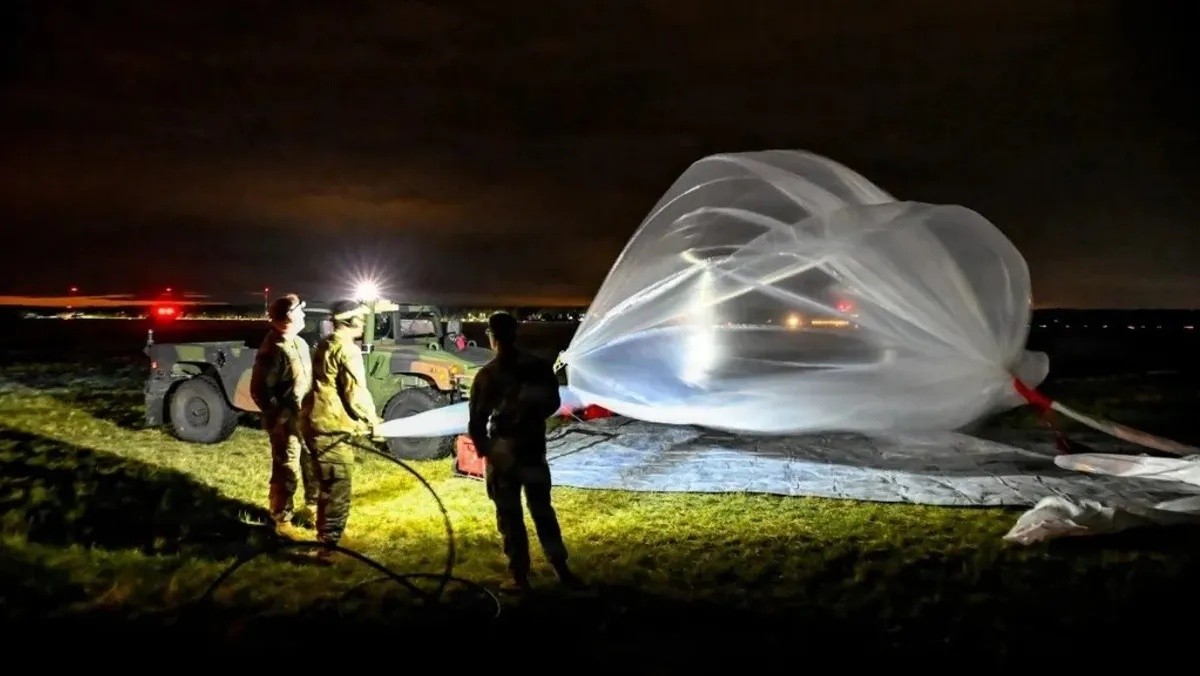
electromagnetic spectrum to create gaps in China's A2/AD network. High-altitude balloons serve as platforms for reconnaissance, communications, and strikes, enabling the US military to deploy more affordable and numerous unmanned aerial vehicles and munitions that are harder for adversaries to
detect. Technological advancements allow these balloons to remain aloft for weeks or months, enhancing their ability to collect data deep inside enemy territory while staying within international airspace. These balloons provide a cost-effective alternative to satellites and complement a comprehensive
data collection system spanning space, air, land, and sea. In case of foreign surveillance balloons breaching US airspace, Washington prefers to control rather than destroy them. Tests indicate that balloons can execute precise strikes that disable enemy systems without full
destruction, creating time-sensitive operational windows. These systems were trialed during Bayonet Quest 26 exercises in Michigan and Lake Huron, demonstrating coordinated deployment and data processing using artificial intelligence. The US Navy plans to increase production of unmanned reconnaissance boats as
part of a broader effort to deploy more robotic platforms against China. These technologies reduce the need for large ground troop presence, emphasizing integration of multiple systems into a unified data layer for enhanced coordination and reduced risk. Similar balloon
tests are conducted worldwide, including during Valiant Shield and Orient Shield exercises, to assess sensing and communication capabilities. The United States ranks first in the 2026 military power index, with China in third place. Stephen Carpenter, commander of the US
multi-domain command in the East, highlighted the role of aerial attack platforms in opening windows of opportunity against A2/AD networks through flexible communications and additional strike capabilities. The command studies optimal seasons and locations for deploying these high-altitude balloons to
strengthen offensive and defensive capacities against adversary targets.