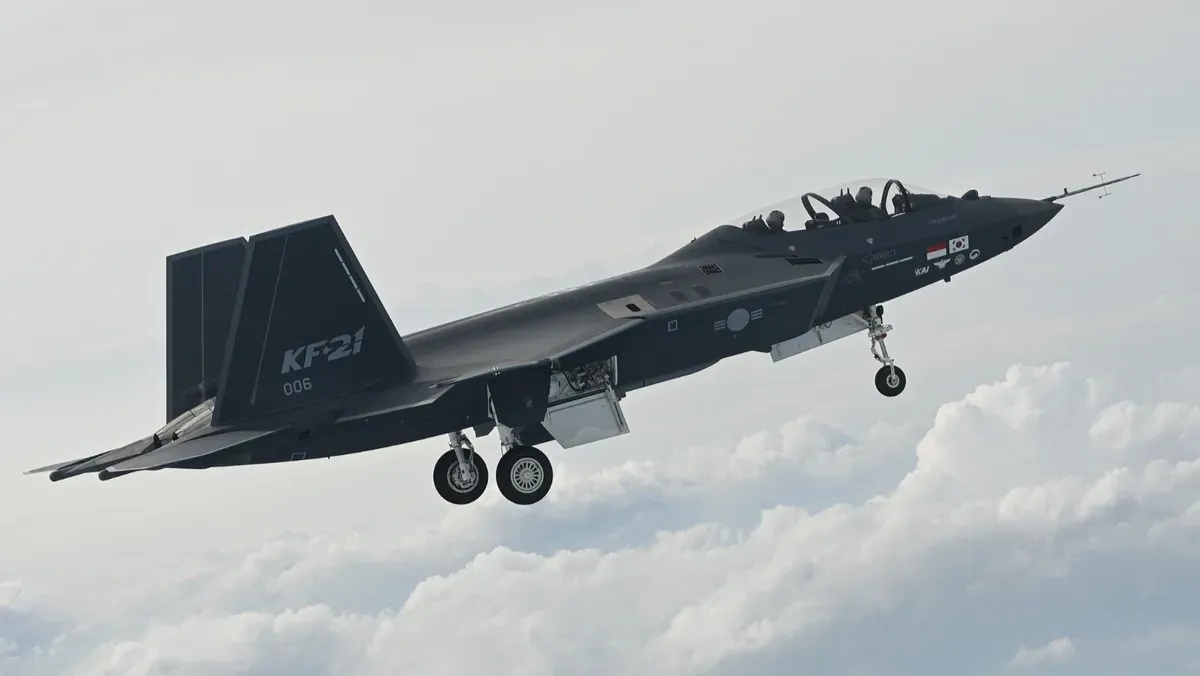
South Korea's Defense Acquisition Program Administration (DAPA) has issued a request for proposals for a conceptual study on a future next-generation Korean fighter jet. The study aims to define the operational concept, preliminary design, and a technology roadmap for its
development. The specified requirements indicate a direction towards developing a highly stealthy, twin-engine aircraft, potentially tailless. This fighter is expected to significantly surpass the conservative design of the KF-21 fifth-generation fighter. The proposed study is slated to last 14 months, with
reports suggesting it includes the study of two competing stealth fighter designs. Required technologies for the new fighter include a tailless design, alternative flight control surfaces, wide-band stealth capabilities covering L, S, and X bands, as well as two adaptive cycle
engines capable of supporting supersonic flight. The cockpit will feature a single-seat configuration, and the aircraft will incorporate internal weapons bays, according to the specialized Military Watch magazine. Developing a tailless fighter represents a major technological leap for South Korea. While
this design contributes to reducing the aircraft's radar cross-section by eliminating traditional vertical and horizontal stabilizers, it simultaneously poses significant challenges in aerodynamics and flight control. South Korea's Agency for Defense Development (ADD) has already commenced studies on such designs,
providing a crucial foundation for the new program. The tailless design is considered one of the essential requirements for sixth-generation fighters, even though some less ambitious "5th generation+" European programs have sought to offer capabilities approaching the sixth generation while still
utilizing less stealthy, tailed airframes. Tailless fighters face considerable challenges in achieving maneuverability due to their lack of horizontal tail surfaces, which traditional fighters use for pitch control, maintaining stability, and rapid changes in aircraft attitude. Consequently, designers must rely
on advanced flight control software, alongside control surfaces integrated into the wings, making the process of controlling the aircraft inherently more complex.