A senior Swedish official has issued a warning regarding the threat posed by Russia to upcoming elections in major European democracies, emphasizing the importance of social media platforms bolstering their efforts to counter Moscow-linked "bot" networks. Magnus Hjort, Director-General of the
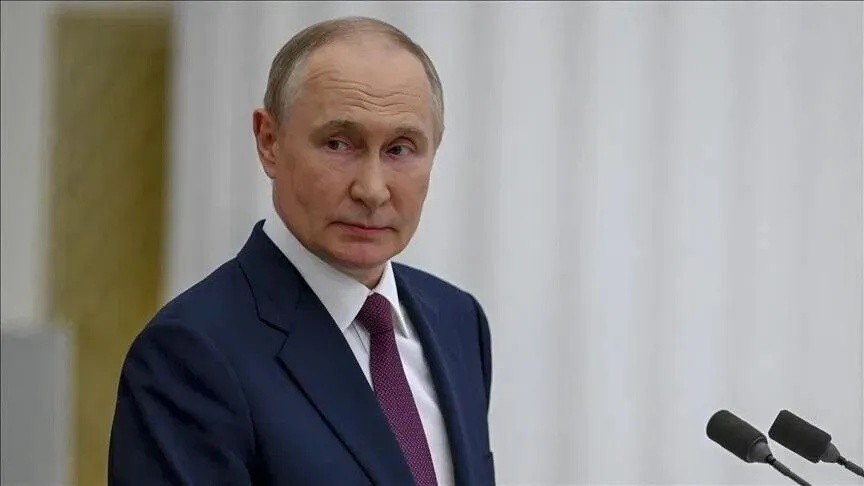
Swedish Psychological Defence Agency, explained that these electoral contests represent a "golden opportunity" for Russian President Vladimir Putin's information warfare machine, aiming to create polarization and fragmentation within European societies. He added that the Kremlin primarily seeks to sow doubt
among voters about the continued effectiveness of their politicians sending money and weapons to Kyiv, doing so by spreading fabricated stories about corruption and alleged abuses in Ukraine. Hjort and his team do not believe Moscow is targeting the general election
scheduled for Sunday in Sweden, attributing this in part to the national unity prevailing in the country behind its policy of supporting Ukraine. Instead, Hjort indicated that Russia is focusing its efforts on more influential nations that will soon hold
elections, including state elections in Germany and the presidential elections in France, where far-right parties, often seen as more sympathetic to Moscow, are expected to make significant gains. Hjort stated: "Our assessments indicate that Russia prioritizes elections in other countries, particularly
the larger European nations." He further added: "Germany is heading towards regional and local elections, while France is preparing for presidential elections next year." These statements come in the wake of previous warnings about Russian attempts to influence voters in
Germany this month, as well as controversy arising before Sweden's upcoming Sunday election concerning alleged links between a far-right official and Moscow. **Hybrid Warfare** Concerns are growing in Germany about what is described as the Kremlin's "hybrid warfare," which has manifested in
a drone attack on Leipzig airport, in addition to the dissemination of fake posts and videos on social media containing accusations of corruption and sexual crimes against electoral candidates. Other elections are scheduled for September 20 in Berlin and the
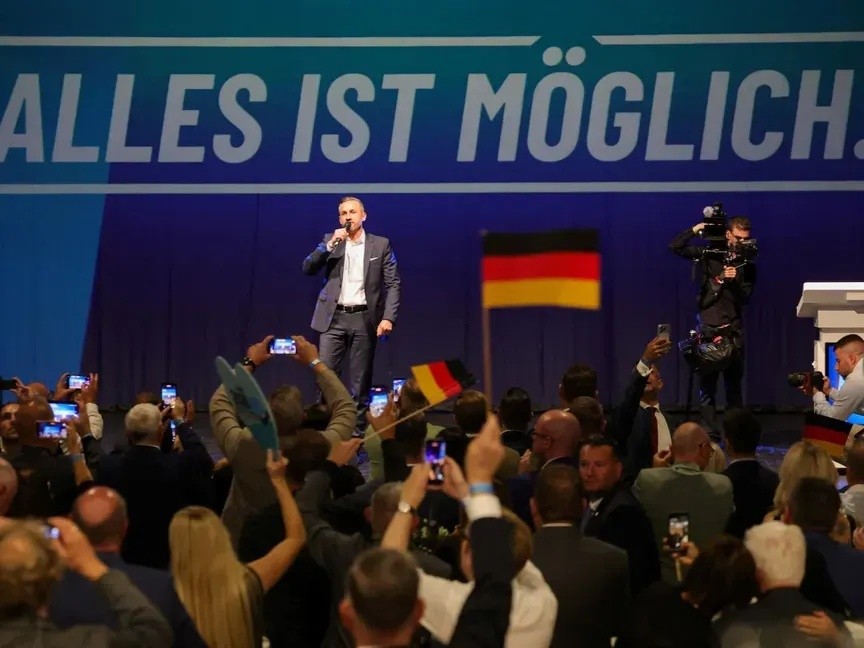
state of Mecklenburg-Vorpommern, with the far-right "Alternative for Germany" (AfD) party expected to achieve strong results. In France, Marine Le Pen, leader of the National Rally party, which has faced past criticism for its notable sympathy towards Russia, leads opinion
polls in the presidential race slated for next year. It is worth noting that Russia-backed disinformation and influence campaigns have targeted Sweden in recent years, particularly in the period leading up to the country's accession to NATO. Hjort called on social media
platforms to exert greater efforts to dismantle the networks of automated accounts (bots) that propagate misleading information and run campaigns influencing public opinion. When asked if he was satisfied with the efforts made by companies like Meta, TikTok, and X
in addressing this issue, Hjort responded unequivocally: "Regarding the platforms? No, I believe they should do more to keep their digital environments free from these bot networks; therefore, there is ample room for improvement." He clarified that social media giants are
driven by a specific "agenda" centered on "making profits," adding: "We have a different agenda; our goal is to eliminate the bot networks that target our democracies. Of course, they do not want them on their platforms – that is
not the problem – but removing them represents a burden and trouble for them." Hjort continued: "We must intensify our efforts and explore more effective ways to protect our democracies. This requires collaboration with our counterparts in European countries and
establishing channels for constructive and fruitful dialogue with these digital platforms." **"Matryoshka" Tactic** Hjort revealed that his agency monitors a "continuous flow" of information manipulation and foreign interference originating from countries such as Russia, China, and Iran. In recent days, his team
observed evidence of an attempt to launch a pro-Russian disinformation campaign using what is known as the "Matryoshka" (or Russian doll) tactic. He explained that this tactic aims to distract fact-checkers, journalists, and others by sending emails with provocative titles
such as: "Look what the Russians are doing." He elaborated: "The idea is to prompt them to pick up the issue, watch the video or targeted content, and then publish it accompanied by a refutation explaining its falsity, ultimately leading
to them wasting their time and effort dealing with such materials." Hjort believes the optimal approach to dealing with these campaigns is simply to deprive them of "the oxygen of interaction." He stated: "Much of this should be ignored" to avoid
falling into Russia's "trap," adding: "They seek to lure you into interaction, to provoke your anger or enthusiasm. They want you to react and share information that exacerbates polarization... Therefore, it is better to leave it unattended." **The Holiday Network** Hjort reported
that a government entity, whose identity authorities have not publicly disclosed, was responsible for managing a network of 1,200 automated accounts (bots) on the X platform, which targeted Sweden and other countries with the aim of sowing division within societies.
This network was dubbed "The Holiday Network" because it initiated its activity by discussing seemingly innocent and non-controversial topics, such as holidays and sports issues. The agency revealed that the network published approximately 50,000 posts and comments during 2025 and
2026, containing opinions deliberately designed to incite division, showing strong support or opposition to pivotal political issues. Hjort commented: "This is the mechanism used when seeking to create polarization within society." The agency head affirmed that his team is fully prepared
to handle any potential developments in the final days leading up to the Swedish election, noting their close coordination with security agencies, electoral bodies, and the Civil Defence Agency, all within an organizational framework specifically established to ensure the protection
of democracy. Currently, Hjort expressed no concern about Russia's potential impact on the election campaign, stating: "Our assessment of the situation indicates the absence of any coordinated campaign currently targeting Sweden." The greatest risk facing Sunday's election may lie in
the public overestimation of concern regarding Russian influence. In this context, Hjort warned that "the fear of foreign interference could be one of the biggest problems, as exaggerating the scale of the threat might lead some to claim that the
elections were unfair or targeted, which could hinder efforts to form a stable government after their conclusion."