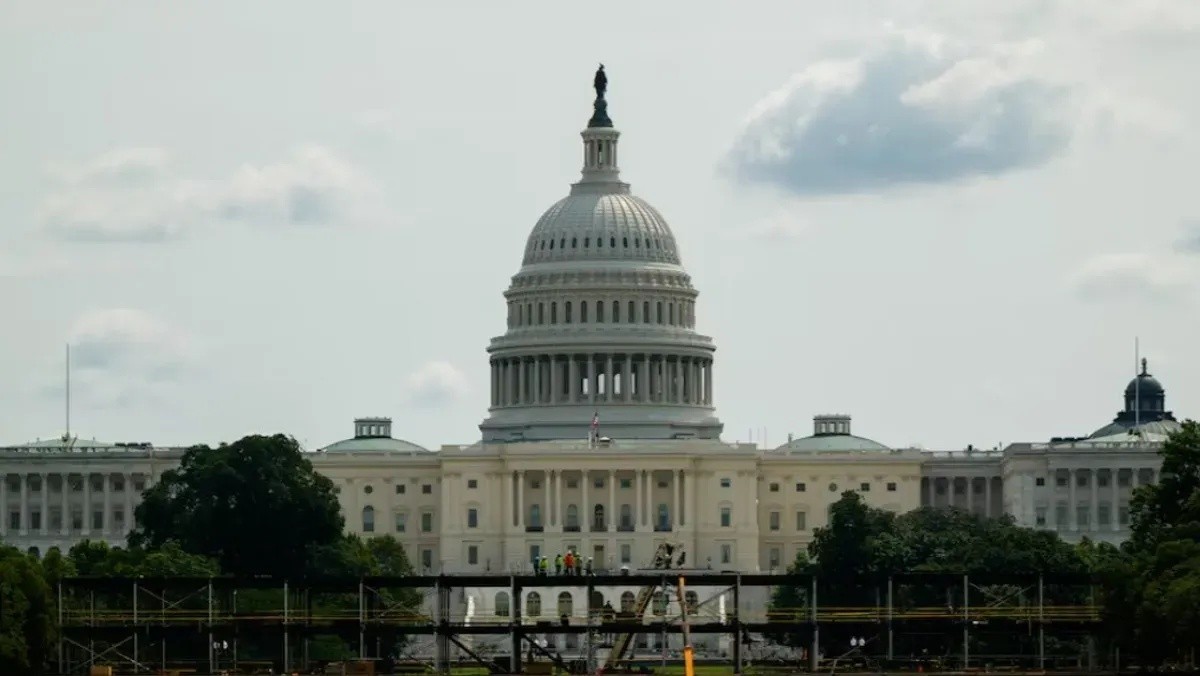
The United States Senate concluded its proceedings for the final time ahead of the upcoming midterm elections, following the Democratic opposition's frustration of a final Republican attempt to pass additional legislative measures. A number of Republican lawmakers, locked in fierce
electoral contests scheduled for November, took to the Senate floor to advocate for the passage of bills that could serve as assets in their political campaigns, according to the Washington Post. However, Democratic efforts successfully blocked those moves, sending Republican
legislators back to their home states to face voters without securing any fresh legislative victories. Republicans currently face a previously unthinkable prospect of losing their Senate majority, while polling data indicates that Democrats are engaged in competitive races across states
that were comfortably won by Donald Trump in the 2024 elections. Senate Minority Leader Chuck Schumer boasted on Wednesday that Democrats are on the brink of reclaiming control of the upper chamber. As the US midterms approach, Democrats are confronting
the rise of socialist factions within their ranks, whereas Republicans are amplifying warnings about the left to attract voters. Schumer stated that Democrats are entering October and the final stretch of the race with strong political tailwinds. Meanwhile, Senate Majority
Leader John Thune accused the opposition of obstructing his party's agenda and attempting to deny Republicans tangible achievements prior to the midterm vote. Unanimous opposition from all Democrats, barring four, met a legislative proposal introduced by Republican Senator Bernie Moreno
of Ohio, which aimed to shield consumers from surging electricity costs partially driven by the boom in data center construction. Moreno is waging a challenging electoral battle against former Democratic Senator Sherrod Brown, who has poured millions of dollars into
advertising campaigns criticizing Moreno for his backing of data centers. Moreno blamed Schumer for blocking a bipartisan bill that had overwhelmingly passed the House of Representatives weeks prior, characterizing the move as a purely political maneuver. Democrats countered by arguing
that Moreno's proposal would do little to lower power bills because it failed to obligate data centers to bear the costs of modernizing electrical grids. Additionally, the Senate rejected a bill advanced by Republican Senator Pete Ricketts of Nebraska, which
sought to prohibit members of Congress from trading individual stocks and to mandate voter ID requirements. Ricketts is locked in a competitive race against independent candidate Dan Osborne in a state won decisively by Trump in 2024. Democrats contended that
Ricketts' bill fell short of sufficiently preventing insider trading and objected to the voter ID mandate on the grounds that it could disenfranchise certain citizens. Congressional Democratic leaders warned President Joe Biden that his continued insistence on seeking the presidency
threatens the party's ability to maintain control of both chambers in the upcoming elections. In a separate move, Democratic Senator Jeff Merkley sought to pass a standalone bill barring the president, vice president, and members of Congress from trading or
holding individual stocks, but Oklahoma Republican Senator James Lankford blocked the measure. On the same day, Alaska Republican Senator Dan Sullivan, facing the risk of losing his seat in November, sought to advance legislation protecting oil and gas development activities
in northern Alaska, warning that Democrats would inflict severe damage on his state if they regained control of Congress. Sullivan told the Senate that a core tenet of the opposition is to shut down Alaska, eliminate thousands of jobs, and
convert the state into a national park. New Mexico Democratic Senator Martin Heinrich blocked the legislation, dismissing it as another measure prioritizing fossil fuels above all else. The Senate concluded its sessions late Wednesday evening after confirming, along partisan lines,
the appointment of Keith Sonderling as Secretary of Labor. Sonderling had been serving as acting labor secretary since the resignation of Lori Chavez-DeRemer in April. Republicans previously recaptured control of the chamber, flipping the upper house after four years in
the minority. The chamber is not scheduled to reconvene in Washington until the conclusion of the midterms, with Democrats requiring four net gains to retake the majority, including at least two seats in states previously carried by double-digit margins by
Trump, such as Ohio and Alaska. Republicans are campaigning on past accomplishments, including the tax and domestic policy legislation signed by Trump last year, which cut taxes on tips and overtime pay. Nonetheless, several Senate Republicans had pushed for months
for leadership to adopt further measures addressing voter cost-of-living concerns. Maine Republican Senator Susan Collins, facing a difficult reelection bid, stated Wednesday she would continue pushing for a vote on a bipartisan bill capping insulin costs at 35 dollars, though
she acknowledged the vote might be delayed until after election day. While Democratic challenger Troy Jackson leads Collins in most polls, a recent survey indicated a slight edge for the incumbent. Collins highlighted an alternative legislative victory: a bill she
authored combating tick-borne illnesses, which was signed into law by Trump on Wednesday. Additional Republicans joined growing calls within the party to end the conflict with Iran, less than forty days ahead of the critical midterms. Louisiana Republican Senator John
Kennedy expressed regret over the Senate's failure to pass the insulin bill and other cost-of-living legislation prior to the midterms, placing the blame on poor planning. Kennedy noted that delaying everything to the final moments inevitably leads to a shortage
of time. The Senate also failed to vote on legislation intended to repeal environmental regulations that Republicans argue drive up costs, with Kennedy warning that departing Washington without voting amounted to legislative negligence. Democrats defeated a cryptocurrency regulatory bill through
a procedural vote following months of bipartisan negotiations, while legislation to govern artificial intelligence failed to reach the floor despite cross-party efforts. Republicans spent considerable time working to pass a bill sponsored by Texas Senator Ted Cruz and Washington Senator
Maria Cantwell to restructure collegiate athletics regulation. The Senate passed the measure on Monday, though several Republicans expressed frustration, arguing it was hardly a pressing priority with the midterms weeks away. Furthermore, four senators announced reaching an agreement on legislation
to streamline federal permitting procedures, which lawmakers argue will eventually lower electricity costs. However, the chamber will not consider the measure until the lame-duck session following election day.