
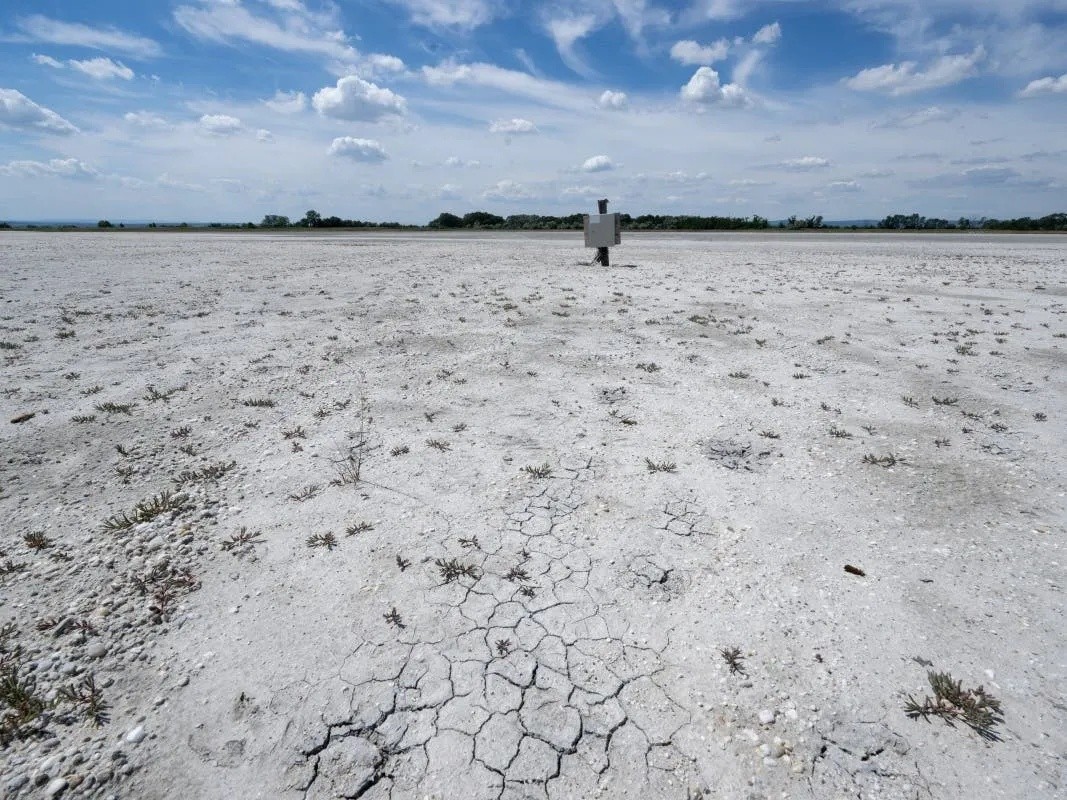
Europe's economy has incurred substantial losses this year, estimated at approximately 113 billion euros, following the severe heatwave that swept across the continent this summer. This assessment comes from an analysis conducted by the German insurance group "Allianz," which detailed
the economic burdens resulting from these extreme weather conditions. Italy recorded the highest losses among affected nations, reaching around 28 billion euros. Germany followed in second place with an estimated cost of about 25 billion euros, while France saw its gross
domestic product decline by 20 billion euros, placing it third. These estimates were released by the Munich-based group, which is listed on the DAX index for leading companies on the German stock exchange. These economic setbacks include a reduction in production
and added value, directly attributed to a decrease in labor productivity, in addition to increased break times and absenteeism from work. The continent-wide losses are projected to amount to just under 0.5% of Europe's total anticipated economic output for the
current year. The "Climate Risk Tracker," prepared for the first time, involved economic experts and specialists from Allianz Trade credit insurance, which operates internationally, alongside experts from Allianz's property and casualty insurance division in Germany. The study's methodology was based on
analyzing weather and damage data, coupled with precise modeling of expected economic impacts. Beyond the direct economic costs stemming from rising temperatures, significant physical damages caused by natural disasters such as storms and floods are also a concern. Allianz estimated these
damages in Germany alone to be around 50 billion euros over the past five years. Projections indicate that annual damages were, on average, double what they were during the reference period between 2000 and 2019. Globally, natural disaster damages have seen
a notable increase of 54%. Commenting on the situation, Frank Sommerfeld, Head of Property and Casualty Insurance at Allianz, stated that "Germany is particularly affected by damages resulting from climate change." Sommerfeld explained that a primary reason for this is that
the European continent, situated in northern latitudes, has experienced a greater temperature rise compared to other continents. Data reveals that Norway led the affected countries, with its average temperature rising by approximately 3.7 degrees Celsius in 2025, compared to the
average between 1950 and 1970. Germany and France also fell within the upper half of the list, recording an increase slightly above two degrees Celsius. However, the magnitude of natural disaster damages is not solely dependent on the severity of the
natural phenomena. In densely populated countries with significant economic power, damages are inherently higher than in sparsely populated areas, where there are fewer factories, homes, vehicles, and other human-made assets. Experts from Europe's largest insurance company are not particularly optimistic about
the coming year, with the natural phenomenon "El Niño" being the primary concern. The rise in water temperatures in the eastern Pacific Ocean, a phenomenon that recurs every few years, can influence weather patterns in distant land regions worldwide. The United
Nations' World Meteorological Organization (WMO) predicts higher-than-average temperatures in vast areas of South America, Southern Africa, and Australia. Conversely, less-than-usual rainfall is expected in the Indian subcontinent and South Central America. In a scenario where severe temperature increases recur in 2027
due to the El Niño phenomenon, global economic output across 144 countries included in the study could decline by an estimated 392 billion euros. China is projected to be the most affected nation in this scenario.