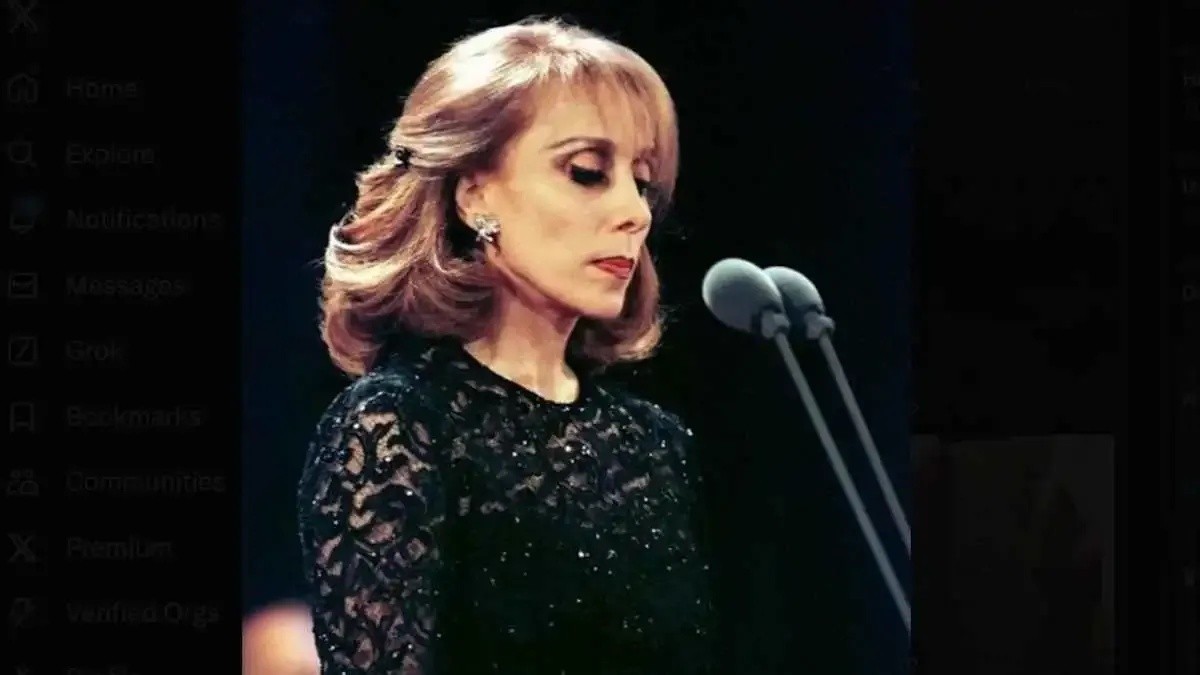
The Arab artistic community witnessed a broad wave of solidarity with the renowned Lebanese artist Fairuz, in response to recent circulating remarks by global Canadian star Celine Dion, who expressed her unfamiliarity with Fairuz or her songs during an impromptu
encounter in the streets of the French capital, Paris. These remarks sparked widespread controversy across social media in Lebanon and the Arab world, reigniting discussions on the global reach of Fairuz, the icon of Arab singing. In France, for example, talent
shows have long featured her songs, "Jarret el Amar" (Neighbor of the Moon), performed by various Arab and international talents for years. Within this context of solidarity, several artists offered heartfelt words of support for Fairuz during their attendance at the
26th Murex D'or Awards ceremony in Beirut. Among them were Bassem Moughnieh, Talal Mardini, Rita Hayek, Carlos Azar, Mohammed Al-Akhras, and Jad Trad, who collectively described her as a "prominent icon" in the Arab music scene. Artist Bassem Moughnieh commented on
the matter, affirming that Celine Dion's unfamiliarity with Fairuz does not diminish her stature, stating that she will remain an "icon of Arab singing." Carlos Azar, in turn, remarked: "As long as Ms. Fairuz is our ambassador to the stars,
it means the stars know her." Syrian artist Talal Mardini stated that the Arab world's knowledge of Fairuz is sufficient, describing her as a "crown on the head of every Arab." Rita Hayek emphasized that Fairuz is an integral part of
Arab musical heritage and an "unrepeatable legend," expressing universal pride in her from Lebanon to the world, adding: "There is no one who doesn't know her." Jordanian artist Mohammed Al-Akhras, for his part, downplayed the significance of Celine Dion's lack of
familiarity with Fairuz, asserting that this does not diminish her value in any way. Al-Akhras suggested that cultural differences between the Arab and Western worlds could be the underlying reason. In a related context, Jad Trad hypothesized that Celine Dion might
have been distraught or taken aback when the question was posed to her. He suggested that the limited international reach of Fairuz's songs could fundamentally stem from reasons related to the country's specific promotional efforts, in his words. It is worth
noting that Celine Dion initially sparked this reaction following a casual encounter with a Lebanese journalist in a Paris street. When the Canadian star was unexpectedly asked if she knew Fairuz, she responded in the negative, then posed a question
with an expression of astonishment: "Should I listen to her?", a spontaneous exchange that quickly spread across social media.